Beyond Exile Governance: The Strategic Evolution of the CTA
Since its establishment in April 1959, the Tibetan Government-in-Exile (TGIE), formally known as the Central Tibetan Administration (CTA), has evolved into a uniquely functioning democracy with all three pillars of democracy.
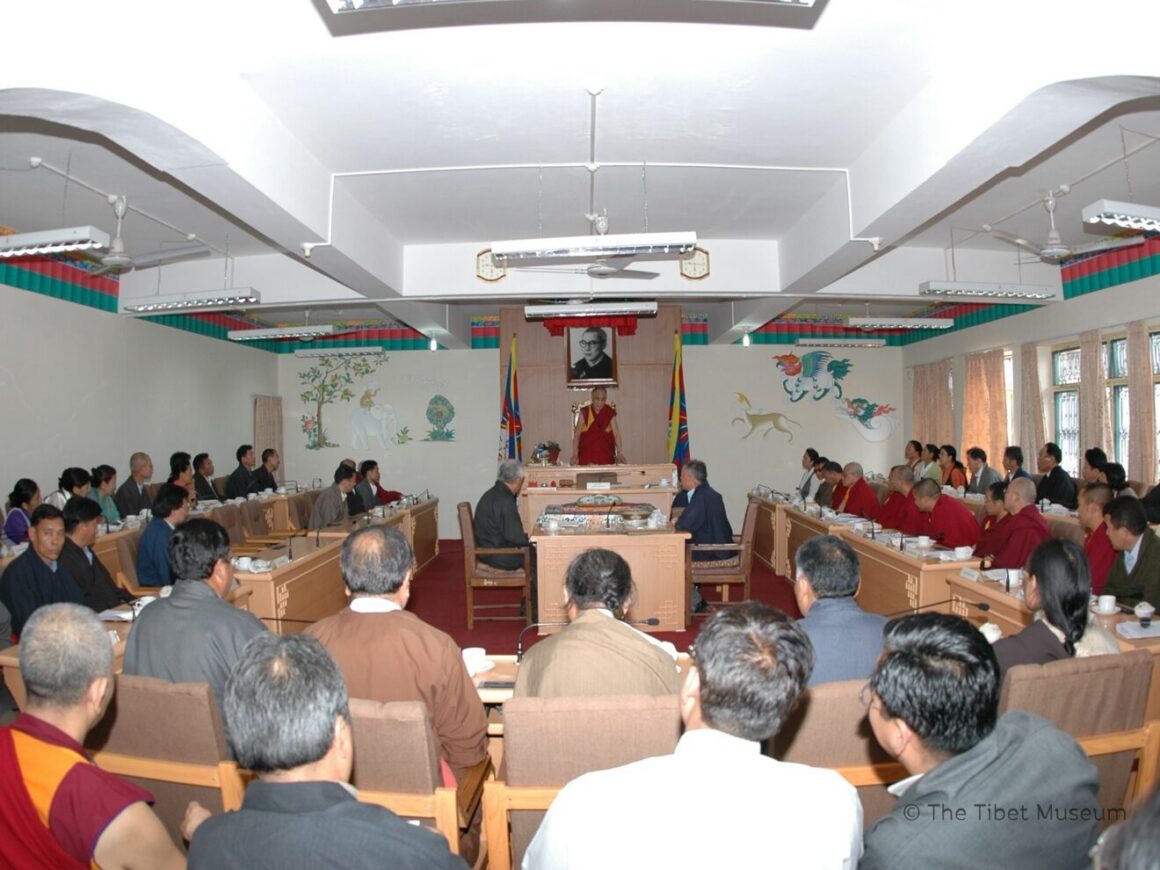
Since its establishment in April 1959, the Tibetan Government-in-Exile (TGiE), formally known as the Central Tibetan Administration (CTA), has evolved into a uniquely functioning democracy with all three pillars of democracy. It works as a de facto government—albeit without a territory—with which the international community interacts. In the process, it has become a topic of research for political scientists and a model for other political movements in similar situations. An analysis of the evolution of CTA shows how His Holiness the Dalai Lama strategically transformed a government structure that had virtually no space for ordinary citizens to a system today where the highest decision making body is made of representatives directly elected by the people.
Soon after the Dalai Lama crossed over into the safety of Indian territory on 31 March 1959, the Indian Government arranged for his stay in the northern hill station of Mussoorie (subsequently moving to Dharamsala). He regrouped those of his ministers and senior officials who were able to escape or who were already in India before 1959 and established the TGiE. The evolution began at that time itself. As His Holiness explains in his memoir, Freedom in Exile (1991), he made two “radical changes” from the system in Tibet:
I saw at this time to the creation of various new Tibetan government departments. These included Offices of Information, Education, Rehabilitation, Security, Religious Affairs and Economic Affairs. I also particularly encouraged women to take part in the government.
Then, on 20 June 1959 the Dalai Lama established the legitimacy of the Administration through a unique rationale. In response to a reporter’s question at his press conference that day, “Do Tibetans still recognise you and your ministers here with you as the Government of Tibet?” the Dalai Lama asserted, “Wherever I am, accompanied by my Government, the Tibetan people recognise us as the Government of Tibet.”1 More than six decades later, this acceptance of the Tibetan people, both in exile and in Tibet, is the backbone of the CTA despite there not being any country that has formally recognised it.
The development of CTA has been in both form and substance. From operating from a single cottage (Mortimer Hall) in McLeod Ganj in 1960, it now occupies several buildings in an area with the Tibetan name, Gangchen Kyishong (“Snow-laden happy valley”). More importantly, the CTA now oversees a vast network of offices in Dharamsala and in all the Tibetan communities in the Indian subcontinent, and the Offices of Tibet in 11 countries.
The role of CTA has also expanded. From meeting the critical needs of the newly arrived refugees, today it is responsible for short-term and long-term needs of Tibetans outside of Tibet on top of the overarching resolution of the Tibetan political problem.
The framework has also evolved. In 1959, the Dalai Lama had minimum choice of shaping the structure. He was also compelled to have a hands-on management oversight, right from appointing the Ministers to even issuing appointment letters for officials. As time passed, the Dalai Lama was able to establish a functioning democratic structure. In his annual “State of the Union” statement on the anniversary of Tibetan National Uprising on 10 March 2001, the Dalai Lama explained,
I had always been aware that Tibet needed social changes and had embarked on reforms while in Tibet under very difficult political circumstances. After coming into exile I have been encouraging the Tibetans in exile to follow the democratic process. Today, the Tibetan refugees may be among the few communities in exile that have established all the three pillars of democracy – legislature, judiciary and executive.2
In 2001, in a major reform the Tibetans in exile began to directly elect the Kalon Tripa, the head of the Tibetan cabinet (now known as Sikyong). This led to the devolution of the Dalai Lama’s political authority to the CTA in 2011. His Holiness had been planning for such an eventuality for long. In his statement on the anniversary of the Tibetan National Uprising on 10 March 1969, he laid out his vision when he said,
When the day comes for Tibet to be governed by its own people, it will be for the people to decide as to what form of government they will have. The system of governance by the line of the Dalai Lamas may or may not be there. It is the will of the people that will ultimately determine the future of Tibet.3
In keeping with his philosophy of “hoping for the best but preparing for the worst”, he developed the CTA to continue functioning no matter what situation developed.
Despite the limitations of an exiled situation, the three democratic pillars—the Legislature , the Executive, and the Judiciary—were given shape and their structure were strengthened. The judiciary was the last to be established, set up only in 1992. As Tibetans living in exile are subjected to the laws of their host countries, there cannot be an independent judiciary. So they came up with a system in the form of the Supreme Justice Commission exercising some aspects of adjudicatory role. As for the legislature, the skeletal Tibetan People’s representatives system established in 1960 evolved into today’s Tibetan Parliament-in-Exile, the holder of the purse strings and policy setter. The Parliament’s composition was structured such that it can symbolically represent the majority of Tibetans left behind in Tibet. The Executive, represented by the Sikyong, saw transformation through direct elections to the post in 2001. The Sikyong nominates the Cabinet, to be confirmed by the parliament. All these changes were enshrined in the Tibetan Charter-in-Exile that is the binding law for the Tibetans in exile.
In general, according to the Westphalian world order, governments are legitimated according to the territory over which they hold authority. But the CTA does not have control of any physical territory in exile, not to speak of in Tibet. Instead, by virtue of the moral authority of His Holness the Dalai Lama and his farsightedness an institutional framework was developed in exile that is exercising that legitimacy.
Challenges before the Central Tibetan Administration
The changing international political landscape combined with China’s transformation of Tibet on one side and with the Dalai Lama being in his 90s on the other, the CTA will be faced with a few challenges in the coming future.
Strengthening the Bond between Tibetans in Tibet and those in exile
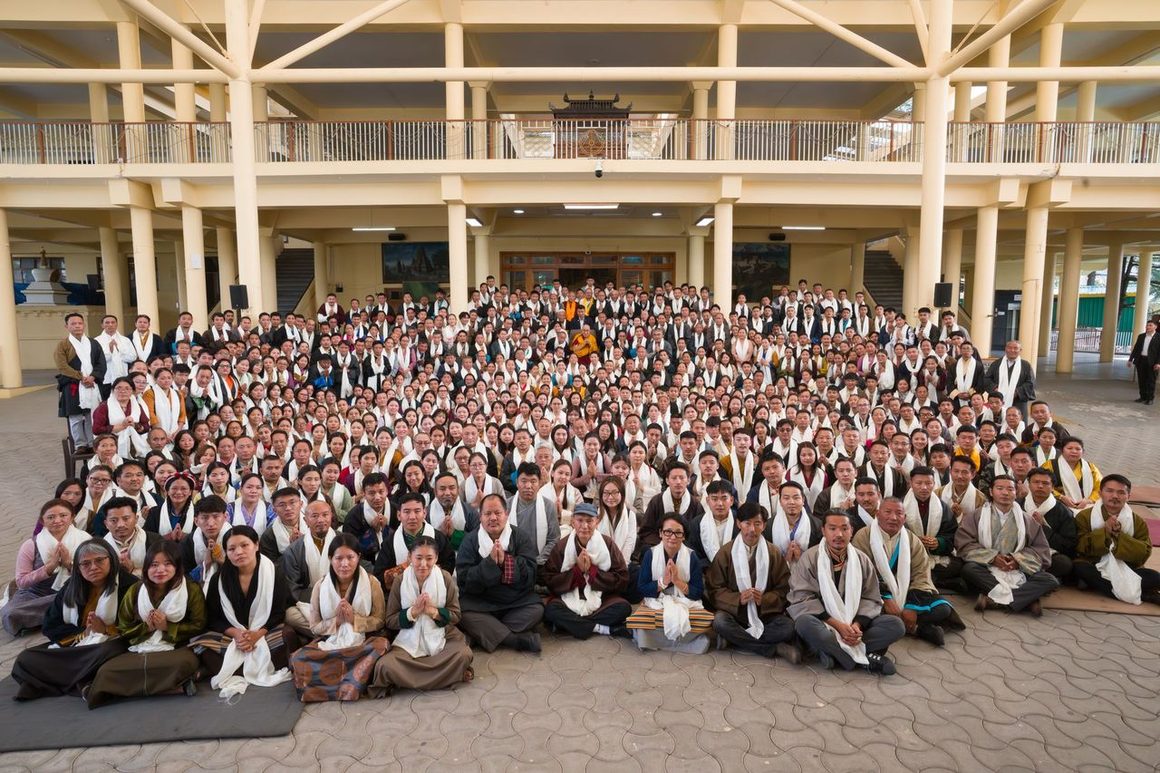
Given the institutional history of the Dalai Lama, he not only maintained, but was able to even strengthen his bond with the Tibetans inside Tibet despite having been physically away from them for more than six decades. The post-1959 era has seen Tibetans from areas outside the territory of the then government of Tibet in Lhasa look to the Dalai Lama as their political leader, too. This has provided powerful leverage for the Dalai Lama. This is the reason for the Chinese effort to distance the people all over Tibet from the Dalai Lama, including through vilification, banning of any contact with him, and even banning his photos.
However, the elected CTA leadership does not have this advantage. It will have to win the trust of the Tibetans in Tibet. In exile, the challenge is to see how it can bring the people together and decrease the negative aspects of electoral politics. While democracy has many virtues, the election system invariably means there will be factional politics and if people lack maturity in their political consciousness, this environment can become obstacle to development.
Establishing itself as the Legitimate Representative of the Tibetan People
When the Dalai Lama was holding direct charge of CTA, he did not face any issue of global legitimacy. Although devoid of any formal diplomatic recognition at the political level, the Dalai Lama nonetheless gained acceptance by governments and organisations alike to speak on behalf of Tibetans both in exile and in Tibet. This was because his leadership position was undisputed among all Tibetans.
Even after the Dalai Lama devolved his political authority, his presence continues to be a factor for the legitimacy of CTA, both within the Tibetan community and outside. He is there to provide political guidance to CTA or even use his good office as and when necessary. For instance, the politically significant Tibetan Rehabilitation Policy that the Indian Government formulated in 2014 clearly says,
The issues relating to Tibetan Refugees are coordinated by His Holiness the Dalai Lama‘s Central Tibetan Relief Committee (CTRC) located at Dharamshala (emphasis added to show how a way has been found by India by virtue of the CTRC, a registered unit under CTA, be of His Holiness the Dalai Lama).
But the elected CTA leadership will have to eventually be able to stand on its own two feet and show that it is able to bring along all the Tibetans together, particularly gaining the confidence of Tibetans in Tibet.
Internationally, while organisations might have less issues, CTA will have to work with governments in finding a creative way for interaction.
Countering the “One China” challenge internationally
Among the issues that the CTA will be challenged with internationally is the assertive Chinese campaign to drive the narrative on Tibet. For example, China has been using direct and indirect means to undermine H.H. the Dalai Lama as well as CTA’s legitimacy by pointing out that any dealings with them would be against a “One China” policy.
A study of the history of this concept shows it came about on account of the Republic of China in Taiwan’s claim to represent China after the Chinese Communist Party (CCP) took over the Mainland. The CCP came out with its “One China Principle” that “there is but one China in the world, Taiwan is an inalienable part of China…”4 The United States, on the other hand, has its “One China Policy”5 again solely with reference to Taiwan. There are other governments who have their respective differing “one China policy”.6 It appears there are more than nine different definitions of “one China” by various governments.7
In an address to the Council on Foreign Relations in Washington, DC, on 23 April 2012, Lodi Gyari, then Special Envoy of H.H. the Dalai Lama, explained why Tibet does not fall under this concept. He said,
No Tibetan government has ever claimed to be the government of China, so the application of the ‘one-China’ policy to Tibet—or for that matter, the PRC government’s ‘one China’ principle that stresses the inalienability of both Taiwan and mainland China as parts of a single ‘China’—simply does not arise.8
Author’s Note
At the time of writing this article, the Tibetans in exile are going through elections for their Sikyong and the Parliament, whose new term begins at the end of May 2026. If we look at statements issued by the current CTA leadership,9 it seems that they are aware of the challenges and are working to overcome them.
References
- The Question of Tibet and the Rule of Law, International Commission of Jurists, Geneva, 1959, page 202. ↩
- Statement of His Holiness the Dalai Lama on the Forty-Second Anniversary of the Tibetan National Uprising Day, 10 March 2001, https://www.dalailama.com/messages/tibet/10th-march-archive/2001 ↩
- Statement of His Holiness the Dalai Lama on the Tenth Anniversary of the Tibetan National Uprising Day, 10 March 1969, https://www.dalailama.com/messages/tibet/10th-march-archive/1969 ↩
- See for example, "Questions and Answers Concerning the Taiwan Question: What is the one-China principle? What is the basis of the one-China principle?" Mission of the People's Republic of China to the European Union, 15 August 2022, https://web.archive.org/web/20230523015133/http://eu.china-mission.gov.cn/eng/more/20220812Taiwan/202208/t20220815_10743591.htm ↩
- "The U.S. One China Policy: A Primer for Professional Military Education Faculty Luke Bellocchi, Joint Forces Staff College, 11 May 2022, https://jfsc.ndu.edu/Media/Campaigning-Journals/Academic-Journals-View/Article/3026633/the-us-one-china-policy-a-primer-for-professional-military-education-faculty/ ↩
- The Many "One Chinas": Multiple Approaches to Taiwan and China, Chong Ja Ian, Carnegie Endowment for International Peace, 09 February 2023 https://carnegieendowment.org/2023/02/09/many-one-chinas-multiple-approaches-to-taiwan-and-china-pub-89003 ↩
- ibid ↩
- Remarks by Lodi Gyaltsen Gyari to the Council on Foreign Relations Washington DC, 23 April 2012, https://tibet.net/remarks-by-lodi-gyaltsen-gyari-to-the-council-on-foreign-relations-washington-dc/ ↩
- Sikyong Penpa Tsering Addresses Tibetans in Washington, Underlines Tibetan Identity as Pillar of Struggle, 06 May 2025, https://tibet.net/sikyong-penpa-tsering-addresses-tibetans-in-washington-underlines-tibetan-identity-as-pillar-of-struggle/ ↩