Monlam’s Role in Preserving Tibetan Language in the Digital Space
Every culture, to survive, must find its footing in the technologies of its time. For Tibetan language—a language with a literary tradition spanning more than a millennium—that means confronting the digital age directly and on its own terms.

Every culture, to survive, must find its footing in the technologies of its time. For Tibetan language—a language with a literary tradition spanning more than a millennium—that means confronting the digital age directly and on its own terms. The Monlam Tibetan IT Research Center has pursued this mission for the past 14 years, building the fonts, dictionaries, and artificial intelligence (AI systems) that allow a displaced community to maintain a living presence in the digital world.
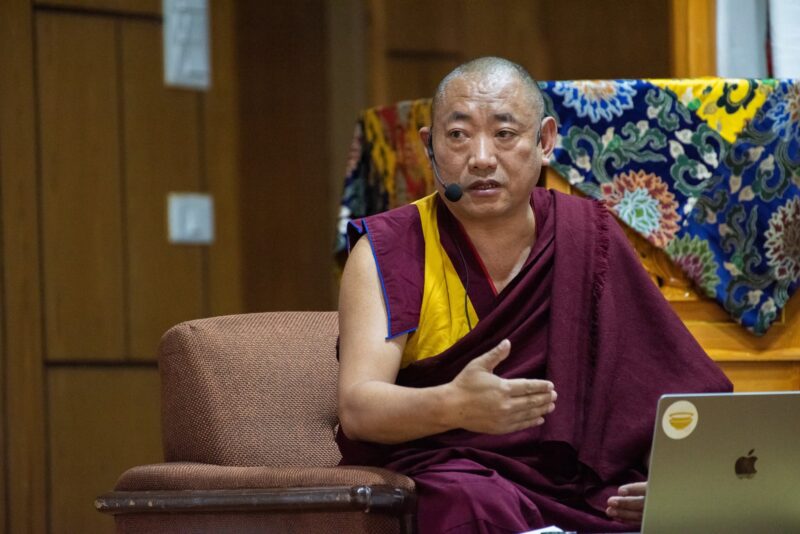
The Center was founded by Geshe Lobsang Monlam, a Buddhist scholar, lexicologist, and programmer, who fled Tibet in 1993 and completed 16 years of philosophical study at Sera Mey Monastery in India. He holds a doctorate in Library Science and has developed more than 37 Tibetan language applications across Android, iOS, Windows, and macOS.
Tibetan is not simply a vernacular. It is the primary medium through which one of the world’s major intellectual and spiritual traditions has been transmitted across 14 centuries. The language preserves the full range of Buddhadharma across three domains: religion, philosophy, and mind science. The Kangyur and Tengyur canons—more than 300 volumes of translated Buddhist scriptures and commentary—exist primarily in Tibetan. Critically, Tibetan translations of Indian philosophical texts on logic, epistemology, and Madhyamaka are in many cases the only surviving record of those works—the Sanskrit originals have been lost. The language’s engagement with consciousness, meditation, and Abhidharma psychology has also drawn serious attention from contemporary neuroscientists and researchers in well-being. Beyond Buddhist philosophy, Tibetan preserves centuries of knowledge in traditional medicine, ecology, history, and poetry—much of it untranslated and existing nowhere else. Its absence from the digital sphere would mean not just the marginalisation of a community but the effective inaccessibility of knowledge that scholars across multiple disciplines are only beginning to engage.
Of the approximately 7,000 languages spoken globally, fewer than 20 receive substantial attention in natural language processing research. The rest exist at the periphery of the digital transformation. Low-resource languages face three compounding deficits: scarce machine-readable text, limited trained language models, and little representation in the research community. The consequences are practical. A language that cannot function in search engines, messaging platforms, or educational software finds its social space progressively narrowed. Young people gravitate towards languages in which they can operate fully in the digital world. Over time, rational individual choices aggregate into generational language shift.
There is also a structural risk for languages that depend entirely on external technology systems. A language whose translation, search, and AI tools are provided by large companies with no stake in its cultural continuity is vulnerable to changes in commercial or political priorities. If those companies deprioritise the language, the community has no recourse. This is the argument for linguistic sovereignty: not the rejection of international tools, but the insistence on building digital infrastructure that is owned, maintained, and accountable to the speakers themselves.
For Tibetan, the work began with a basic problem: Tibetan had no reliable digital infrastructure—no usable fonts, no accessible dictionaries, no tools that ordinary speakers could use on contemporary devices. The first product in this endeavour was Monlam Bodyig—a Tibetan font system, now in its third version, which underpins how Tibetan appears on screens worldwide. Alongside it came the Monlam Grand Tibetan Dictionary—223 volumes in print, over 100,000 digital downloads—used by millions of speakers and scholars globally.
The Center has since moved into AI. Monlam AI is developing machine translation, speech-to-text, text-to-speech, and optical character recognition (OCR) for Tibetan. It has also built Melong, an in-house large language model (LLM). AT present, Melong has approximately 12,000 unique IP users, Monlam AI has 21,000 users, and the broader platform has13,500 users. The models have been trained on 28 billion tokens—a figure that required generating most training data from scratch, since Tibetan had no pre-existing digital corpus of adequate scale.
Building this infrastructure required confronting what might be called the low-resource paradox: without sufficient data, building language technology is difficult; without language technology, generating more data is harder. The costs of hiring annotators, Tibetan language experts, and quality control specialists are hurdles that well-resourced languages do not face. Monlam has addressed these not by waiting for external solutions but by building its own data pipelines, annotation networks, and quality frameworks—work the Center intends as a replicable model for other low-resource language communities.
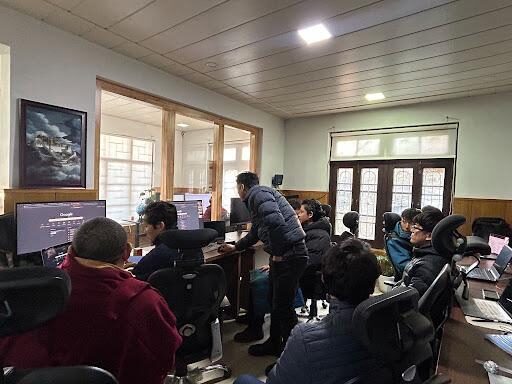
Technical work alone does not capture what Monlam has built. The project depends on close collaboration with Tibetan language teachers, historians, monks, linguists, and technology professionals. This network ensures that the language processed by Monlam’s models is culturally grounded, not merely technically functional. For its lexicographic work, the Center mobilised over 200 editors from monasteries and community organisations across multiple countries.
The project has also created remote employment for more than 500 people in Tibetan settlements, institutes, monasteries, and schools across the diaspora. These positions span annotation, quality control, linguistic research, and software development. Particularly significant is the employment created for younger Tibetans in technology—a field where Tibetan language competence and technical expertise had rarely intersected. By requiring both, Monlam has given diaspora youth with technical skills a professional reason to remain engaged with their heritage language, and has encouraged more Tibetans to pursue STEM education. When a scholar reviews a translation output or a monastery provides annotated curriculum texts, they are doing something simultaneously technical and traditional: preserving knowledge in the medium of their time.
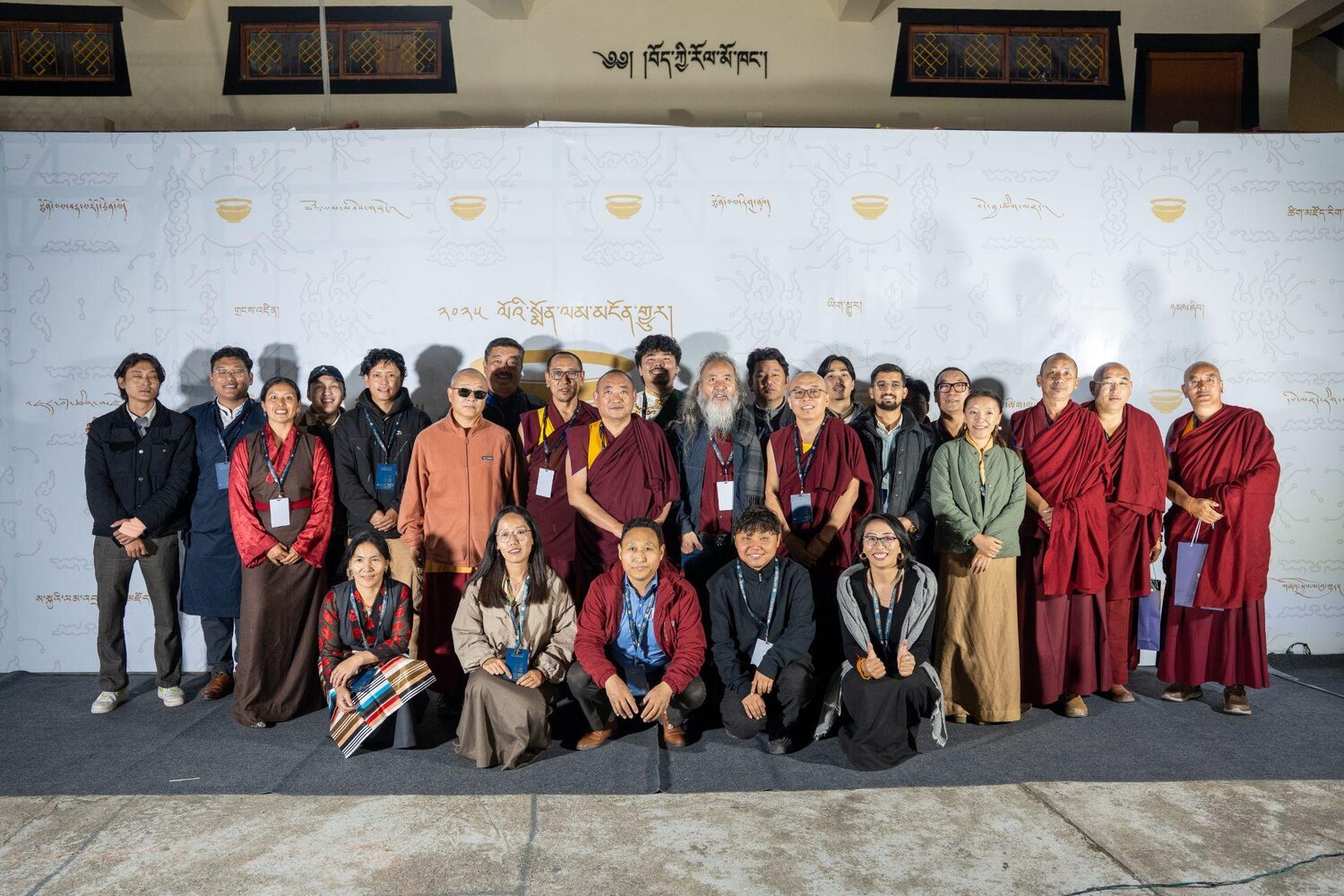
Team Monlam AI at the 3rd Monlam Manifest held in Dharamshala on 3rd November, 2025.
What the Monlam Tibetan IT Research Center has built over 14 years is the digital infrastructure for a language whose absence from AI systems would, over time, threaten its transmission to the next generation. The fonts, dictionaries, and AI models are not peripheral products. They are how the Kangyur and Tengyur, the philosophical texts, the medical traditions, and the poetry survive into a world mediated by machines. For every low-resource language community facing similar pressures, the institutional model, the data architecture, and the community networks that Monlam has developed represent a practical demonstration that this work is possible without the resources of a commercial technology company. Fourteen years in, the Center continues. Guided by Geshe Monlam’s founding commitment, the work of preservation, building, and linguistic sovereignty goes on.