China’s Colonial Polices and its Practice in Tibet
The expansion of China's colonial boarding school system in Tibet represents one of the most far-reaching sociocultural transformations in the region's modern history.

Introduction
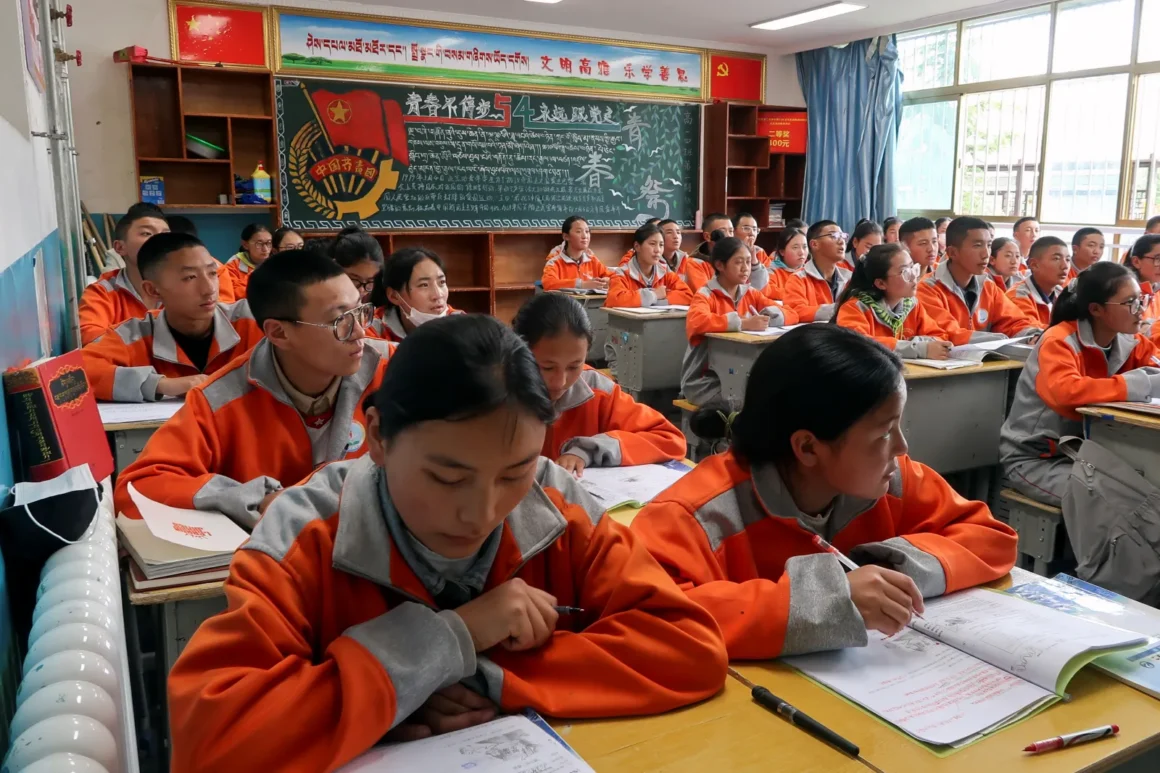
The expansion of China’s colonial boarding school system in Tibet represents one of the most far-reaching sociocultural transformations in the region’s modern history. While Chinese officials present these institutions as vehicles for ‘poverty alleviation’ and ‘modernisation’, a growing body of scholarship argues that their design reflects settler-colonial logics aimed at restructuring Tibetan identity, language, and cultural life (Barnett, 2020; Fischer, 2020). By separating children from their families, communities, and linguistic environments for most of the year, these schools have become central mechanisms through which the state reorders Tibetan society and disrupts its 4,700-year-old civilisational continuity.
This article examines the boarding school system as a state strategy of colonial transformation, particularly its impact on Tibetan language vitality. Drawing on interdisciplinary scholarship and recent evidence from Tibetan educational initiatives, it argues that the policy landscape is bifurcating the role of Tibetan language—Mandarin Chinese is positioned as the sole pathway to socioeconomic mobility, while Tibetan is being pushed towards a narrow function as a symbolic marker of heritage. Community-based educational programmes provide important countercurrents, yet remain structurally marginalised.
Colonial Education as a State Strategy
Education has long served as a primary tool for transforming colonised populations (Fanon, 1963; Gellner, 1983; Ngũgĩ wa Thiong’o, 1986). In the People’s Republic of China (PRC), schooling in minority regions operates simultaneously as a developmental promise and an assimilationist mechanism (Postiglione, 2014; Tsung & Cruickshank, 2009). Since the 2000s—and especially after 2016—the government has rapidly expanded boarding schools throughout Tibetan areas, framing them as necessary for equalising educational access and promoting national integration.
However, research demonstrates that these institutions frequently centralise Mandarin-medium instruction, restrict Tibetan-language use, and enforce tightly regulated institutional cultures that limit religious, cultural, and family-based socialisation (Roche, 2019; Yeh, 2013). The result is a significant reduction in the everyday linguistic and cultural spaces essential for Tibetan intergenerational transmission. This structure parallels earlier colonial schooling systems in North America and Australia that sought to assimilate Indigenous children by weakening family and community ties.
Linguistic Reordering and the Future of Tibetan Language
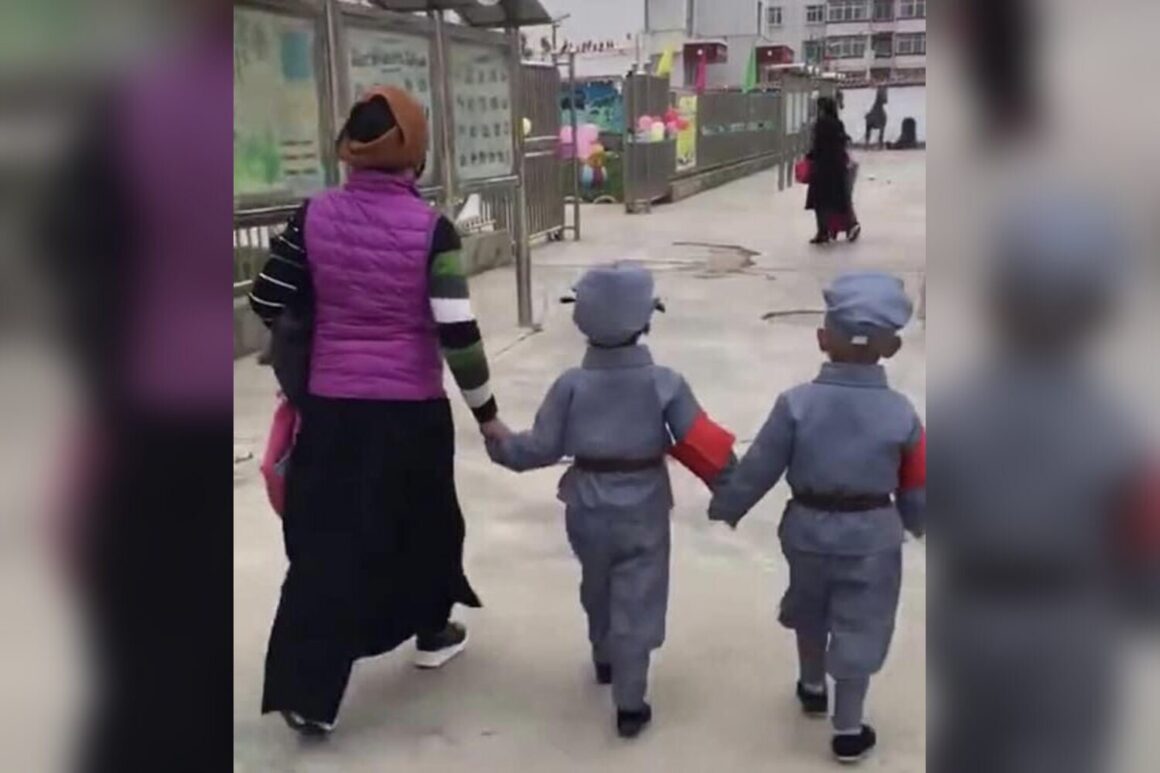
One of the educational videos referenced in this analysis features a Tibetan speaker who argues that Tibetan language risks losing its functional role in contemporary public life under current sociopolitical conditions. This concern aligns with established linguistic scholarship indicating that Tibetan is increasingly relegated to religious, ceremonial, or traditional domains as Mandarin becomes dominant in education, government, and employment (Hill, 2015; Tournadre, 2017).
This linguistic reordering is not incidental. It reflects a deliberate state strategy that frames Mandarin as essential for economic mobility, national belonging, and participation in public institutions. Although officially labelled ‘bilingual education’, most Tibetan schools prioritise Mandarin in nearly all instructional contexts, with Tibetan marginalised to a single subject or extracurricular activity (Makley, 2018; Tshe dpag et al., 2021). Over time, such policies reduce the social and economic value of Tibetan language, thereby shrinking the environments in which culturally embedded knowledge can be transmitted.
Community-based Resistance: The Case of Weekend Programmes
In contrast, another educational video highlights a community-led initiative created by a Tibetan woman who organises weekend language programmes for children enrolled in state boarding schools. These programmes offer protected spaces for children to use Tibetan, learn local knowledge, and reconnect with their communities. Scholars describe such efforts as ‘micro-level cultural resilience’, emphasising their crucial role in maintaining minority cultural life under restrictive state policy (Roche, 2021).
Despite their importance, these initiatives remain limited in scale and resources. They operate outside the state’s institutional support and cannot fully counterbalance the linguistic and cultural erasure facilitated by full-time boarding education. Nevertheless, they reflect the agency of Tibetan educators and the enduring aspirations of families to sustain cultural continuity.
Boarding Schools as a Civilisational Crossroads
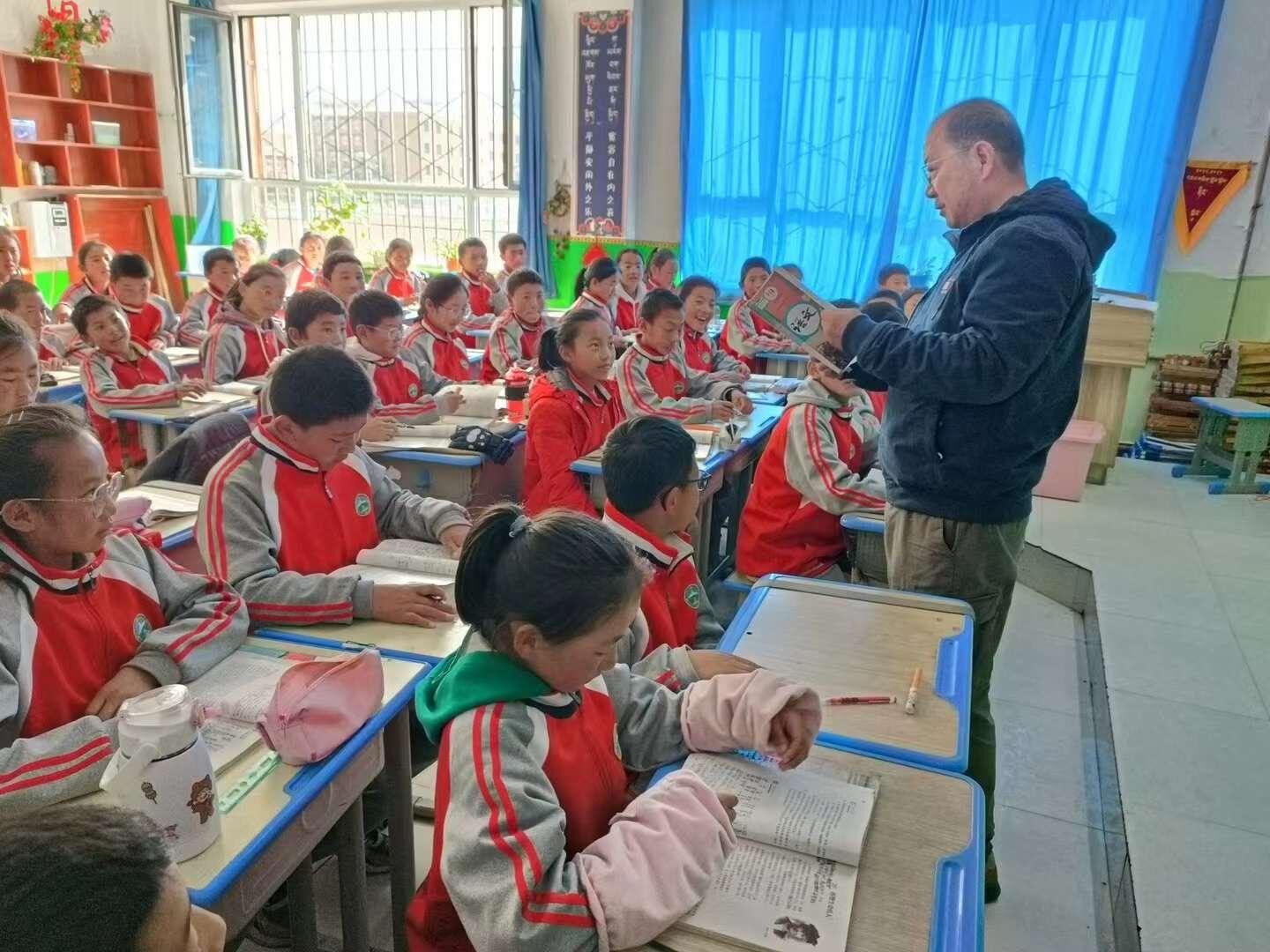
The contemporary educational landscape in Tibet represents a civilisational crossroads. China’s boarding school expansion does more than alter schooling structures—it transforms the cultural ecology that has historically sustained Tibetan society. If Tibetan language becomes functionally irrelevant in social, economic, and administrative life, the consequences extend beyond pedagogy to worldview, cosmology, and collective memory.
Thus, the boarding school system operates as a civilisational disruptor, not merely an educational institution. While Tibetan culture has historically demonstrated remarkable resilience, the current pressures—linguistic, political, institutional, and demographic—are unprecedented in scale.
China’s New Law of Ethnic Unity and Progress: It for Unity or to Commit Genocide against Minorities?
The next 15–20 years will be the key under China’s colonisation of Tibet. Because education is the central arena in which the future of Tibetan society will be determined. If language, culture, and identity are not sustained through education, the continuity of Tibetan civilisation is at risk. A recent policy ascertained the civilisational risk of Tibet by China’s newly passed policy.
China’s recently enacted ‘New Law of Ethnic Unity and Progression’ seeks to fundamentally transform Tibetan society by undermining the traditional system of reincarnation, including the recognition of the Dalai Lama lineage. The law’s broader objectives appear to include legalising the assimilation of Tibetan culture into the Chinese state, expanding the scope of human rights violations both domestically and internationally, and strengthening transnational repression of Tibetans abroad.
By eroding cultural diversity, the law threatens not only Tibet’s heritage but also the broader cultural landscape of Asia. It may also provoke other ethnic minorities towards separatist strategies in response to increased state control. In practical terms, the law directly challenges the continuity of the Dalai Lama lineage, accelerates the assimilation of Tibet into a Chinese-modelled region, undermines Tibet’s existence as a distinct nation, and creates new geopolitical pressures, notably intensifying challenges for India in the region. Overall, the law represents a strategic attempt to consolidate control over Tibet while reshaping cultural and political dynamics in Asia.
The underlying aims of these policies can be summarised as follows: A) Legalisation of cultural and linguistic assimilation; B) Expansion of human rights restrictions both domestically and transnationally; C) Intensification of transnational repression; D) Erosion of cultural diversity within China and across Asia, and E) Increased risk of social and political destabilisation among minority populations.
Conclusion
China’s colonial boarding school system is reshaping the cultural and linguistic foundations of Tibetan society. By removing children from their communities and restricting the functional domains of Tibetan language, the system accelerates linguistic erosion and reorients identities towards a state-centred national framework. Community-based interventions provide crucial forms of resistance but cannot independently counteract the systemic erasure produced by state policy.
Protecting the future of Tibetan language—and the continuity of Tibetan civilisation—requires safeguarding linguistic rights, supporting local educational initiatives, and generating sustained scholarly and policy attention to the long-term impacts of colonial schooling.
References
- Barnett, R. (2020). Lhasa: Streets with Memories. Columbia University Press.
- Fanon, F. (1963). The Wretched of the Earth. Grove Press.
- Fischer, A. M. (2020). The Disempowered Development of Tibet in China. Lexington Books.
- Gellner, E. (1983). Nations and Nationalism. Blackwell.
- Hill, N. W. (2015). “Language policy in the Tibet Autonomous Region”. In G. Zhou and M. V. Clark (eds.), Minority Languages in China. Springer.
- Makley, C. (2018). The Battle for Fortune: State-Led Development, Personhood, and Power in Tibet. Cornell University Press.
- Ngũgĩ wa Thiong’o. (1986). Decolonising the Mind: The Politics of Language in African Literature. Heinemann.
- Postiglione, G. (Ed.). (2014). Education and Social Change in China: Inequality in a Market Economy. Routledge.
- Roche, G. (2019). “The politics of Tibetan multilingualism”. International Journal of the Sociology of Language 256: 109–32.
- Roche, G. (2021). “Minority language resilience in China”. Asian Ethnicity 22(4): 669–89.
- Tshe dpag, Lama Jabb and colleagues. (2021). Tibetan-Language Education Studies.
- Tsung, L., and K. Cruickshank (2009). “Mother tongue and bilingual education in China”. International Journal of Bilingual Education and Bilingualism 12(3): 273–88.
- Tournadre, N. (2017). “The linguistic diversity and complexity of Tibetan”. Revue d’Études Tibétaines 41: 5–135.
- Yeh, E. T. (2013). Taming Tibet: Landscape Transformation and the Gift of Chinese Development. Cornell University Press.