The Dalai Lama Institution in a Global Context
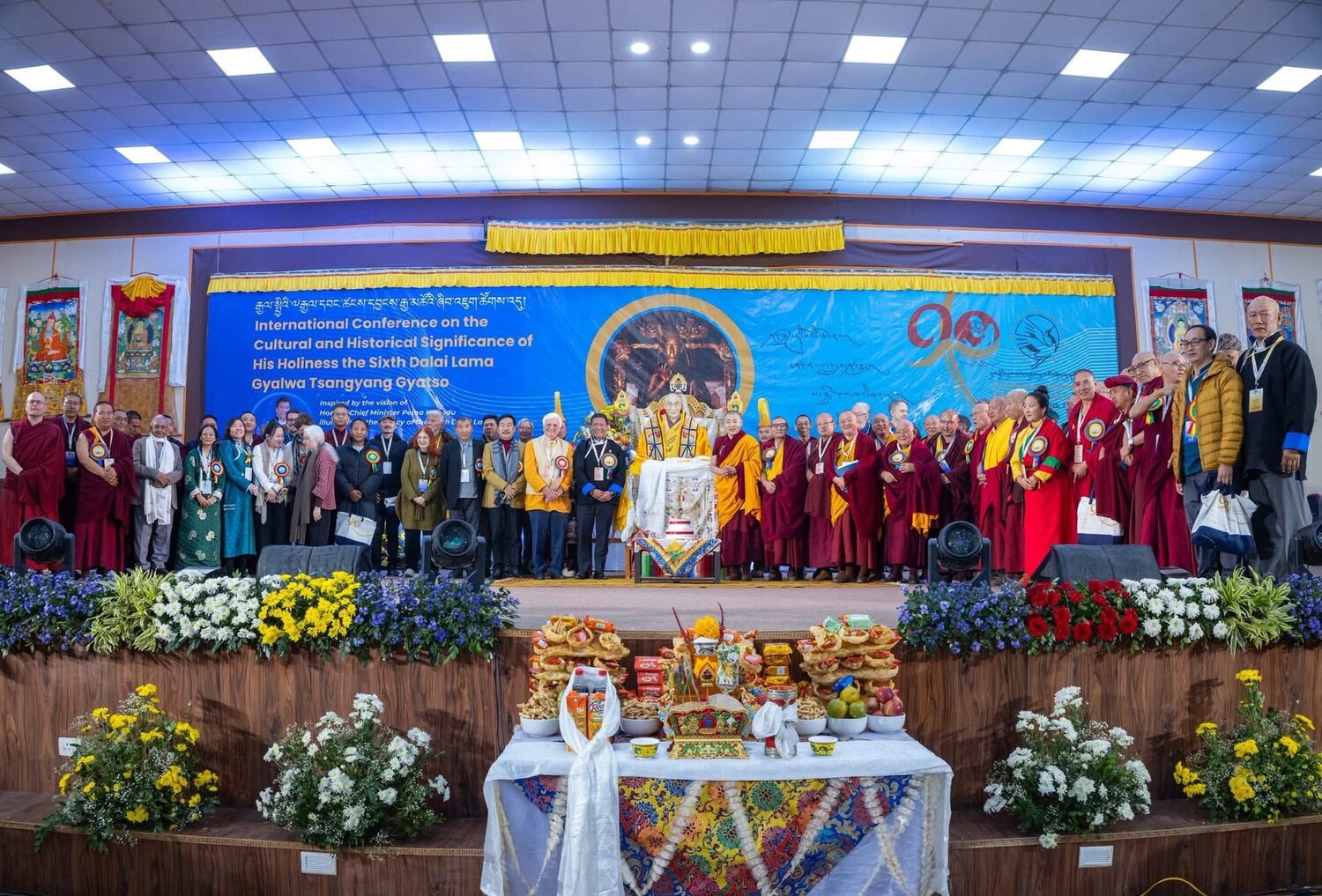
Camera crews and journalists from across the world, from local Himalayan TV to French radio and the BBC, arrived early at a conclave of Tibetan Buddhist religious leaders coinciding with the Dalai Lama's 90th birthday in July 2025. As an image of the Dalai Lama appeared on screens, the room fell silent.

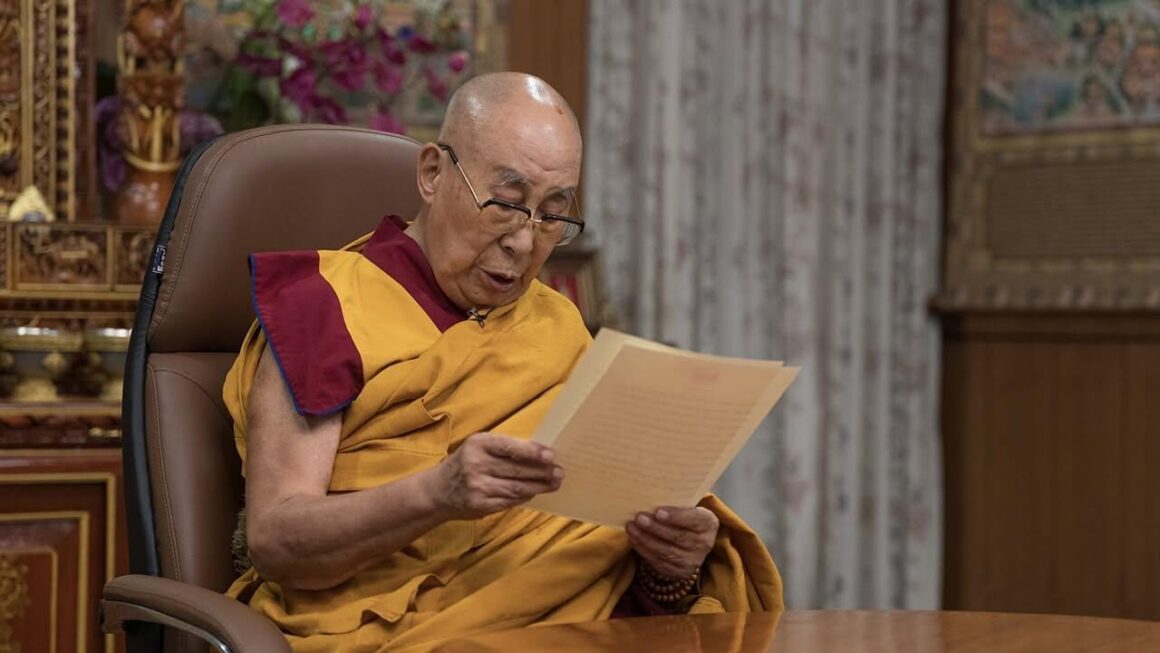
Camera crews and journalists from across the world, from local Himalayan TV to French radio and the BBC, arrived early at a conclave of Tibetan Buddhist religious leaders coinciding with the Dalai Lama’s 90th birthday in July 2025. As an image of the Dalai Lama appeared on screens, the room fell silent. This was the long awaited statement by His Holiness on plans for the future, conveyed on video from his residence, and it did not disappoint. The Dalai Lama affirmed that the institution of the Dalai Lama would continue, and that his Gaden Phodrang Trust has sole authority to recognise a future reincarnation, saying: “no one else has any such authority to interfere in this matter.”
Xi Jinping may promote an ‘unyielding Marxist atheism’ among Party members, but Beijing was rattled. It issued a peremptory statement reiterating that, on the contrary, approval rests with the People’s Republic of China (PRC) and that the search must be conducted inside China. A month later, Xi Jinping showed up in Lhasa for a heavily choreographed, North Korean-style display of control—in contrast to the joyous celebrations in Dharamsala.
China views any future succession of the Dalai Lama as a ‘protracted war’, regarding control over Tibet’s religious elite as crucial to maintaining its grip on this strategically vital region. The lines of contest, long visible to those watching the region, are now formally drawn. They cut across borders that India’s policy establishment can no longer treat as merely adjacent to its strategic interests.
What is at stake is not primarily a contested religious succession. Throughout his 65-year exile—the most difficult and dangerous period in Tibet’s two-millennium history—the 14th Dalai Lama has safeguarded Tibet’s national, cultural, and religious identity. He also become the first Dalai Lama to transition from a traditional head of state to champion democratic governance in exile. Assuming full political authority as early as 1950, the Dalai Lama demonstrated that same resolute commitment to his people in 1956. While travelling to India to attend celebrations marking the 2,500th anniversary of the Buddha’s birth news of China’s increasingly brutal suppression of his homeland reached him. Despite counsel from his brothers and other close advisors that he remain in safety, he made the fateful decision to return to Tibet.
The civilisational reach of Tibetan Buddhism—across the Indian and Nepalese Himalaya, Bhutan, and Ladakh; across Mongolia and the Central Asian Russian Republics of Tuva, Buryatia, and Kalmykia; into Han Chinese society itself—is what makes Beijing’s effort to capture the institution so consequential, and what gives the administration in exile an element of strategic leverage in efforts to engage China. The Dalai Lama’s global moral authority and popularity, the resilience of Tibetans in protecting their culture, and the appeal of India’s ancient Nalanda tradition as a ‘science of mind’ of relevance to 21st-century concerns are the real counterweights to PRC influence operations, and what Beijing is working systematically to dismantle.
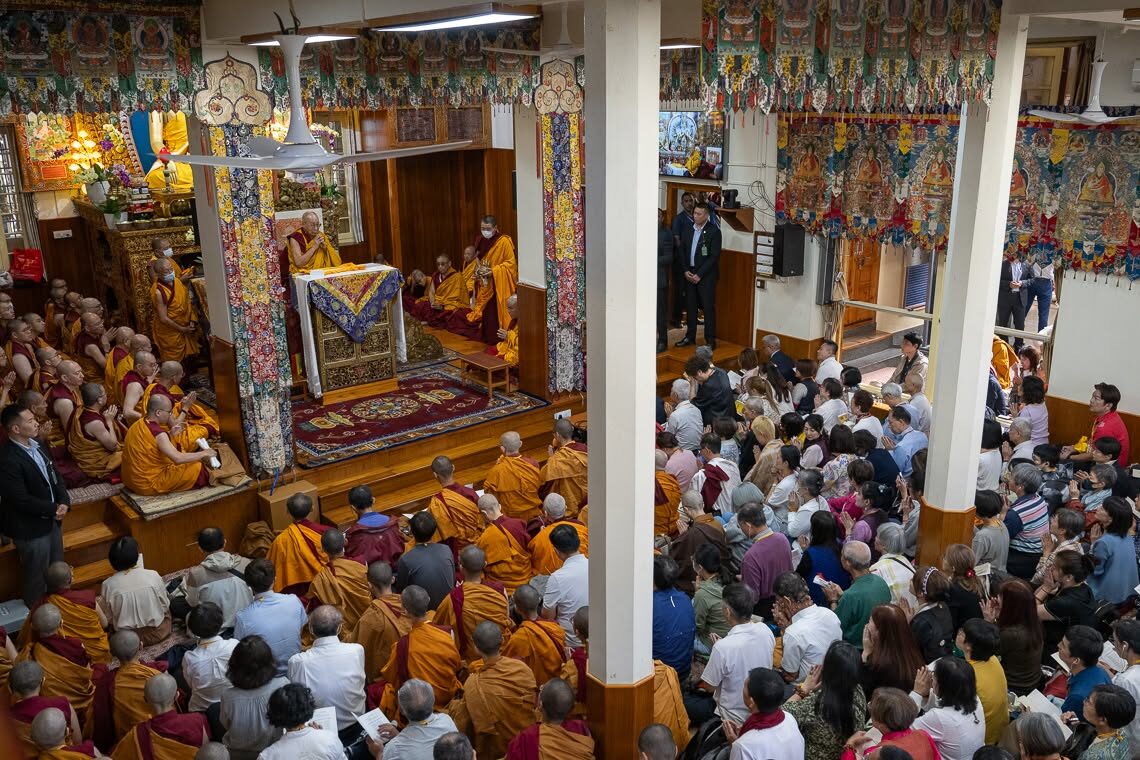
Under Xi Jinping, the appropriation and ‘Sinicisation’ of Buddhism has become integral to China’s foreign and domestic policy framework. Hard repression inside Tibet—the forced disappearances and imprisonment of senior monks, raids on prominent monasteries to confiscate images of the Dalai Lama and other exiled religious leaders, Communist Party control over monastic committees—all point to a systematic effort to eliminate perceived challenges to state authority.1 These policies, which have intensified in the Dalai Lama’s 90th birthday year, are compounded by a sharp-power projection beyond PRC borders that pressures governments to deny visas to the Dalai Lama and those connected to him, bankrolls Buddhist organisations across Asia in exchange for loyalty, secures the exclusion of Indian and Tibetan scholars from religious initiatives, cultivates pro-Chinese Communist Party (CCP) religious proxies, and threatens the safety of a vulnerable exile diaspora.
Demonstrating China’s efforts to control influential Buddhist figures even beyond China’s borders, Hungkar Dorje Rinpoche, a 56-year old abbot of a monastery in Tibet, was pursued to Vietnam only for China to announce his death several days later. The suspicious death of this respected Tibetan reincarnate lama, who was dedicated to the protection of Tibetan language and culture, marks how far that reach now extends.
Tibet is where India and China’s competing interests intersect, in a complex and high-stakes relationship of rivalry, deadly conflict, and economic partnership. Until the People’s Liberation Army (PLA) took control of Tibet in 1950, there was no contiguous border between China and India, and that fact still governs the strategic geometry. As the home of the Dalai Lama and base of the Tibetan exile administration, India is the principal target of Chinese pressure over the future of the institution.
Border incursions since Xi Jinping came to power have tripled.2 Militarisation on the border involves new strategic roads, the Lhasa–Nyingtri railway capable of moving troops at speed to contested sectors, the dual-use Lhuntse Dzong (Lhokha) airport less than 30 miles from the McMahon Line, and the network of xiaokang border villages whose two largest clusters—Tsona, opposite Tawang in Arunachal Pradesh, and Dzayul, opposite Walong—sit where the 1962 fighting took place. Tawang itself is the strategic hinge: over-run by Chinese troops in 1962, claimed by Beijing as ‘south Tibet’, and the birthplace of the Sixth Dalai Lama, Tsangyang Gyatso, in 1683. The possibility that a 15th Dalai Lama could in future be recognised in the region—among devotees in Arunachal Pradesh, Ladakh, or the wider Himalayan belt—gives the militarisation a dimension that succession-period contingency planning cannot ignore. China will, on existing evidence, seek to disrupt and fragment the Tibetan exile community: there are already disinformation flows seeking to blacken the reputation of the Dalai Lama and key officials in the Gaden Podrang Trust, and the possibility that Shugden followers select a candidate with Chinese backing cannot be ruled out.
The wider regional architecture has shifted in ways that are rarely read alongside the succession question. In 2023, China hosted representatives from over 40 countries, among them the Deputy Prime Minister of Mongolia, the Vice-Chairperson of Nepal’s National Assembly, Bhutan’s Energy and Natural Resources Secretary, and the Acting Foreign Minister of Pakistan, in heavily-militarised Nyingtri, with India conspicuously absent. This was followed by various China-led Trans-Himalayan groupings deliberately structured around India. Beijing presses governments to use the Chinese name ‘Xizang’ for Tibet—a move with direct legal and historic implications for India.3
These efforts are explicitly tied to a Sinicised projection of Buddhism, with the World Buddhist Forum and the Hainan Nanhai Academy as institutional vehicles. Tibetan Buddhists played a vital role in saving Nalanda’s teachings when the university was razed centuries ago, and in their revival today; yet when Prime Minister Modi inaugurated the revived Nalanda University in Bihar on 20 June 2024, he was accompanied by the Chinese Ambassador, not by the main living proponent of the tradition, the Dalai Lama.
Nepal’s strategic drift is an illustration of how China’s regional Buddhist project operates in the absence of countervailing pressure. Kathmandu has formally adopted the ‘One China principle’, going beyond the standard ‘One China policy’ to explicitly endorse Beijing’s positions, and signed a September 2023 joint communiqué with the PRC pledging to prevent ‘separatist activities’ on Nepali soil. China has successfully restricted traditional escape routes for Tibetan refugees, with a dramatic reduction in Tibetan arrivals from thousands to dozens or less annually, while the border town of Dram has been turned into a military garrison with enhanced security on both sides.
Although the Tibetan community in Nepal (which has shrunk to around 9,000) is demoralised and disadvantaged, Tibetan religious leaders with a strong international profile now have a powerful presence and are attracting people from all over the world to their monasteries in the Kathmandu valley. They are also highly engaged in interactions between Dharamsala and Himalayan Buddhists, while many Chinese Buddhists come to Nepal to experience authentic, as opposed to Sinicised, religious teachings.
Just a few kilometres across the border from India, the Lumbini Buddhist University was inaugurated in December 2024 in partnership with the Beijing Language and Culture University. The intent is to displace Bodh Gaya, where the Dalai Lama taught almost every winter until the COVID pandemic, in the imagination of Buddhists, and to dilute India’s historical and cultural connection to Buddhism itself. Beijing’s attempt to send its Panchen to Lumbini in May 2022 (and again in 2024) was rejected by Kathmandu, but the cultivation of Shugden lineages in Nepal opens up the dangers of an interregnum-period scenario, with the protective optics of Buddhist Nepal and a propaganda staging-ground at the Buddha’s birthplace directly on India’s border.
Mongolia provides an early reading of how this contest unfolds beyond PRC borders. The Dalai Lama’s public recognition of a Mongolian-American child as the new Bogd Lama, or Jebtsundampa, the nation’s spiritual leader, in March 2023 triggered reactions from China, which seeks to control Buddhist institutions across Asia, threatening the security and religious freedoms of Mongolian Buddhists. Mongolia has become a frontline of the Shugden offensive, with supporters at the heart of government, business, and religious life and the sect used as a front for advancing Chinese political and business interests; the abbots of several significant Ulaanbaatar monasteries have sought funding from China’s Panchen Lama, who has been openly invited to Mongolia.
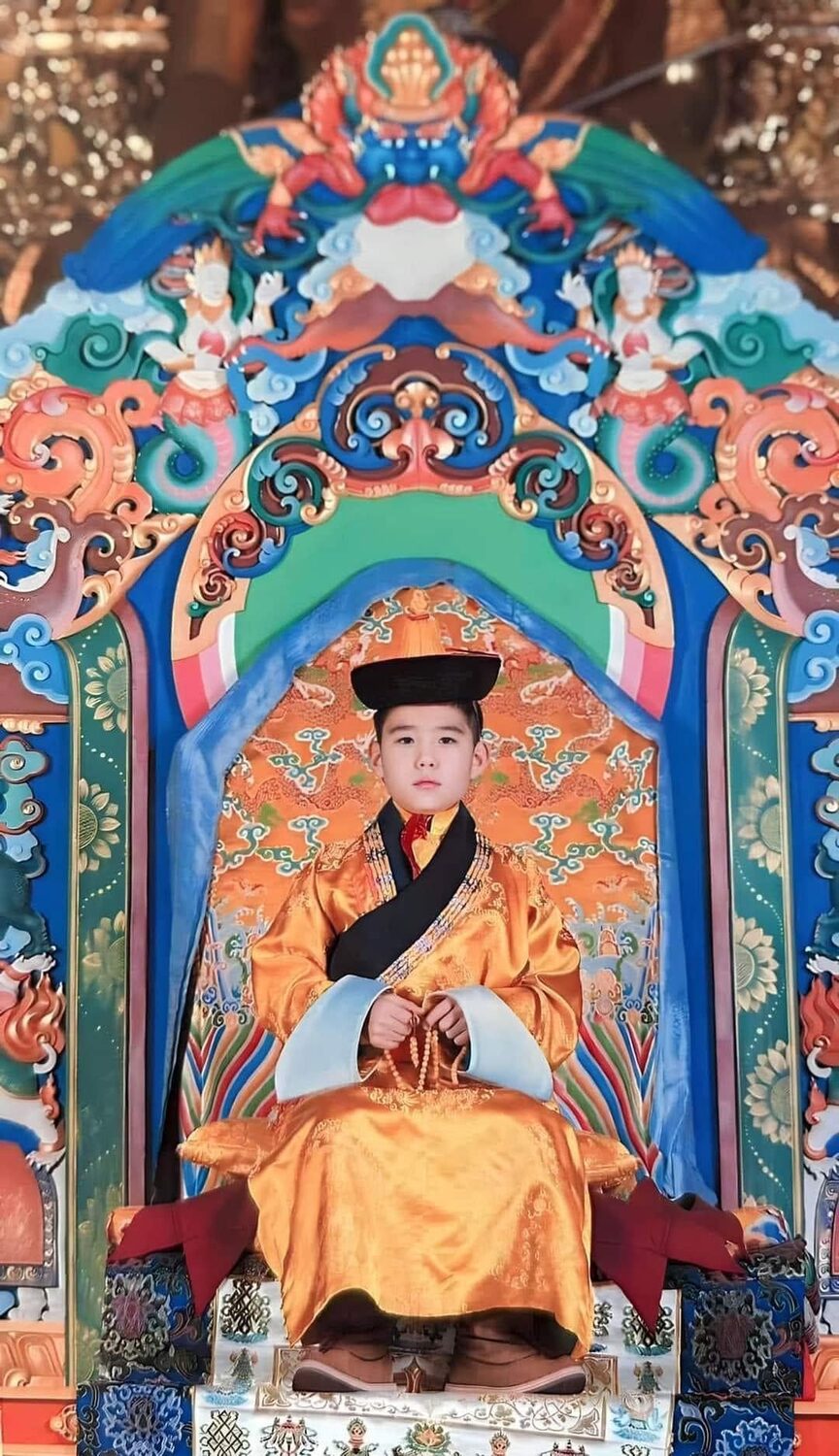
Nevertheless, Buddhist institutions in Mongolia are standing their ground and the boy known simply to many as ‘The Tenth’ is gaining popularity, with thousands of devotees gathering to see him at teachings in Ulaanbaatar, and the retired head of Mongolian Buddhism in Mongolia, former Khamba Lama D. Choijamts saying that he will undoubtedly “play an important role in world Buddhism”.4
Under the Dalai Lama’s leadership, Tibetan Buddhism has become a vital and socially progressive force globally, with the capacity to provide alternative frameworks to navigate a fractured global order and the devastation wreaked historically by communism. What hangs in the balance extends well beyond Tibet’s future. It tests the international community’s resolve to safeguard pluralism, religious freedom, and cultural autonomy against transnational authoritarian networks whose reach increasingly transcends borders through disinformation, economic coercion, and digital control mechanisms.
The window for establishing effective countermeasures to these threats is narrowing as China accelerates elaborate plans to control Tibet’s future and impact Buddhist discourse globally. India sits at the centre of this geometry not by choice but by geography, history, and the Dalai Lama’s exile itself. What is being tested is whether neighbouring countries, Buddhist regions, and like-minded governments can construct the multilateral engagement the moment requires before the architecture of authority over the institution is settled by other means.
References
- Recent cases of Tibetan political prisoners who are in critical condition after torture, poor health after release from prison, or who have been 'disappeared' demonstrate a system that is methodical, opaque, and increasingly punishing even of private expressions of Tibetan identity. Documented by Tibet Watch, https://tibetwatch.org/disappeared-tortured-and-silenced/ and https://tibetwatch.org/the-dalai-lamas-90th-birthday-in-tibet/]
- International Crisis Group, 'Thin Ice in the Himalayas', https://www.crisisgroup.org/sites/default/files/2023-11/334-thin-ice-himalayas.pdf ↩
- As historian Claude Arpi has observed, India's north-eastern boundary was negotiated between Sir Henry McMahon and Tibetan Prime Minister Lonchen Shatra; the term 'Xizang' appears nowhere in the agreement. https://www.deccanchronicle.com/opinion/columnists/claude-arpi-chinas-communists-and-new-old-game-of-poker-885930 . Also see International Tibet Network report, 'Tibet not Xizang', https://tibetnetwork.org/tibet-not-xizang/ ↩
- Interview with the now retired Khamba Lama D. Choijamts by @Ganchimeg in Baabar.mn (in Mongolian), http://www.baabar.mn/article/dchoijamts-x-bogd-bol-burkhanii-shashnii-ertuntsud-aguu-uil-buteekh-gegeenten-yum ↩