The Plateau’s Quiet Revolt: Geography, Identity, and the Elusive Quest to ‘Close’ Tibet
The 'Roof of the World' or Tibet, presents one of the most formidable challenges to modern governance and statecraft.

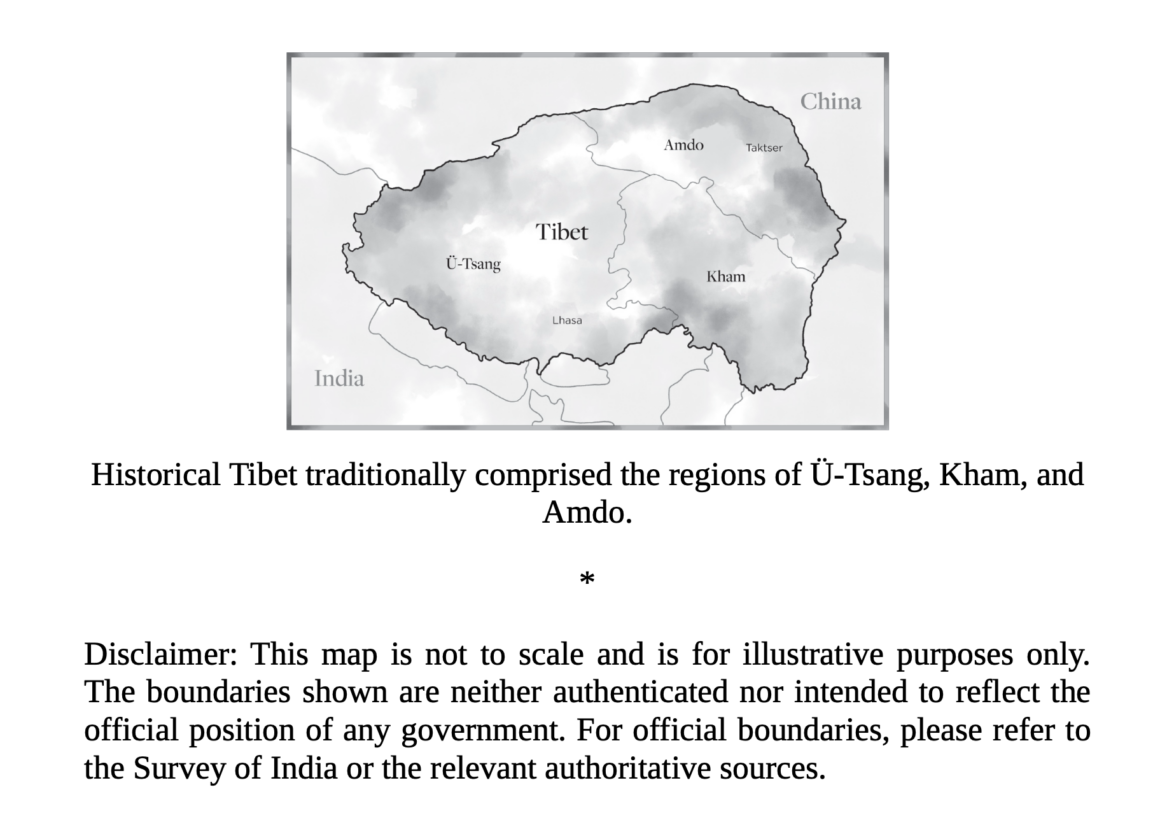
The ‘Roof of the World’ or Tibet, presents one of the most formidable challenges to modern governance and statecraft. Spanning about 2.5 million km2, with an average elevation beyond 4500 metres, Tibet comprises of Amdo, Kham, and U-tsang with Tibetan inhabitants. In 1965, the People’s Republic of China (PRC) established the Tibet Autonomous Region (TAR), which is home to roughly 3.65 million people in a territory of 1.2 million km2.
Harsh climate, low oxygen, permafrost, and vast differences are some of the facets that embody the limits to centralised power in upland peripheries. Logistics, military projection, and economic integration are all dependent on these difficult facets of the TAR. Despite China’s massive investments in infrastructure, surveillance, and assimilation, full incorporation remains elusive. Tibet’s upland geography imposes structural constraints on state power. Moreover coercion without legitimacy breeds resilient resistance. Understanding the Tibet context is crucial to understand why high-altitude peripheries resist full subjugation, even by powerful authoritarian states such as China, which has tried several means to close the region by attempting to erase Tibetan narratives and cultural autonomy.
Upland Geography and High-Altitude Governance Dilemmas
Tibet’s physical environment fundamentally limits state reach; the extreme altitude of the Tibetan plateau creates physiological barriers, as oxygen levels drop to 50-60% of sea level, demanding acclimatisation that slows troop movements as well as civilian labour. While non-Tibetans, including Han Chinese administrators and soldiers face higher risks of altitude sickness, reduced physical efficiency, and long-term health issues, locals tend to possess genetic adaptations enabling efficient oxygen use without elevated levels of haemoglobin. Such an asymmetry favours indigenous resilience over outsider control.
Compounding the problem are issues of permafrost. Extensive permafrost layers cover much of the plateau, where ongoing thawing due to climate change threatens the stability of roads and rail lines. The Qinghai-Tibet Railway, that was opened in 2006, is a flagship project that traverses 960 km, above 4000 metres. It required specialised engineering for frozen soil, oxygen supplementation, and ecological mitigation. However, it still faces ongoing permafrost degradation risks, projected to cost billions in infrastructure repairs by 2090. Military operations suffer similarly: diesel engines lose power, helicopters carry lighter loads, and resupply demands strain even advanced systems. High-altitude bases need oxygen pipelines and medical networks; while recent expansions by the People’s Liberation Army (PLA) demonstrate technological progress, they also underscore persistent constraints on rapid and sustained deployment.
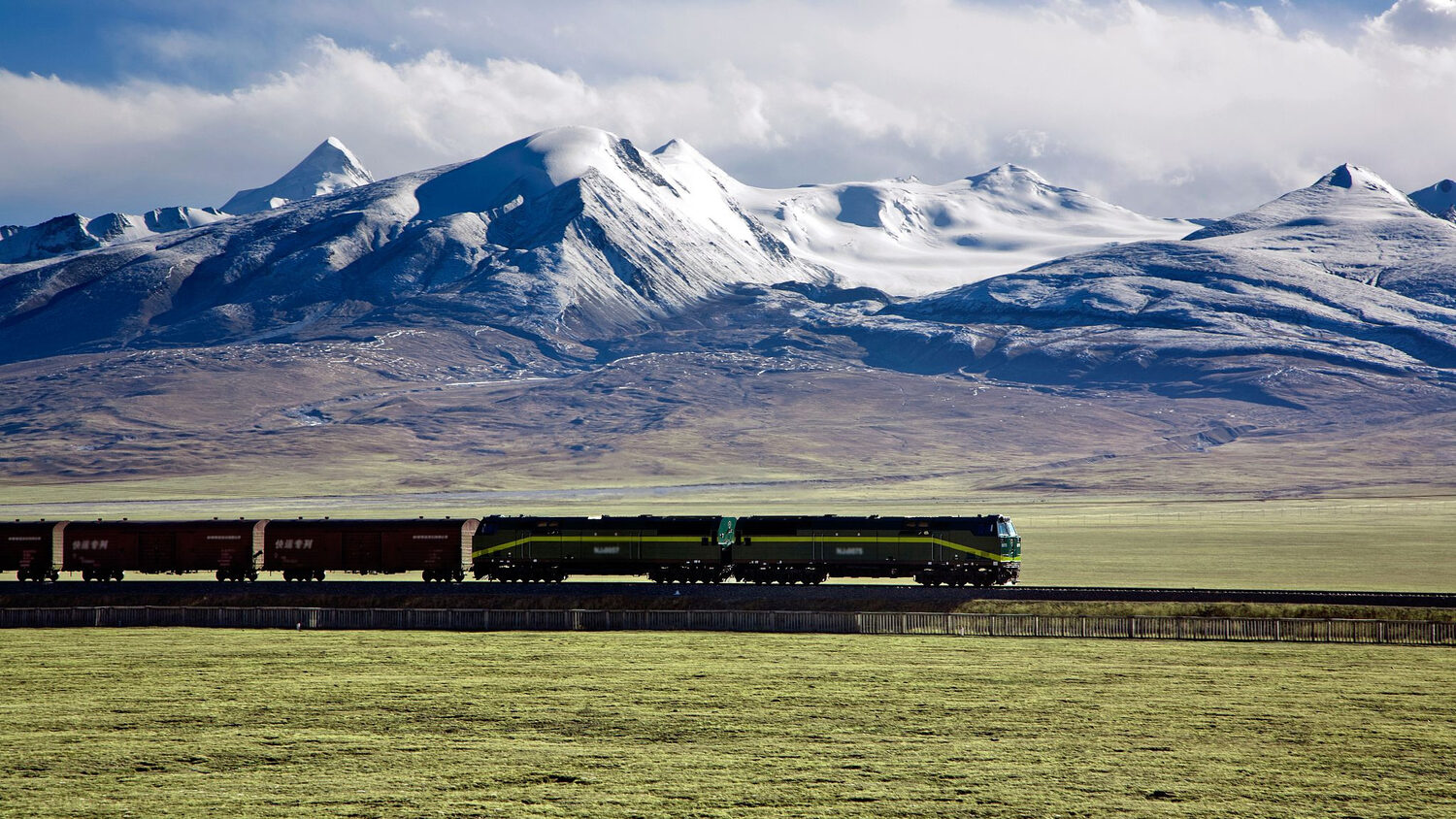
The TAR’s vast, rugged terrain, which includes mountains, valleys, and sparse population, further fragments state control. Traditional Tibetan pastoralism and mobility historically evaded lowland states. Geography enables state evasion, through dispersion, oral cultures, and flexible adaptive identities. Tibet—while historically having its own state formations—fits this pattern as its plateau acts as a natural barrier, rendering full surveillance and extraction costly. Modern extensions, including border roads, dual-use infrastructure, attempt to integrate the region economically but simultaneously expose environmental fragility. The majority (75%) of the Tibetan plateau is now ecologically vulnerable; warming has accelerated permafrost thaw, undermining the very projects that are supposed to develop the plateau. Geographic distance dilutes coercion, while local knowledge of micro-environments sustains autonomy. China’s responses in the form of railroads, highways, and airfields have compressed space, but have not eliminated it; winter closures and altitude still constrain year-round dominance.
Why Legitimacy Matters more than Coercion
Most modern states rely on Weberian legitimacy of consent via shared norms, alongside coercion. In Tibet, Beijing prioritises the latter, visible in the form of grid-style surveillance, facial recognition cameras, monastery police stations, boarding schools for more than one million Tibetan children, emphasising Mandarin, attempts to Sinicise Buddhism through state-appointed lamas, rewritten curricula criminalising Dalai Lama veneration, and so on. The limits of coercion are exemplified by ethnographic evidence from Amdo in Northeastern Tibet. Local officials often negotiate consent pragmatically with religious and tribal leaders, subverting central demands for uniform sovereignty to maintain order; acknowledging that ideological imposition alone fails.
Legitimacy gaps are structural as Tibetans view China’s rule as colonial. Economic gains in the form of infrastructure and tourism feel extractive, benefiting Han migrants, while eroding pastoral livelihoods and cultural sites. Chinese Communist Party (CCP) documents admit that Tibetans remain ideologically resilient. Repression hardens identity, rather than erasing it, and younger generations, despite state education, preserve language ties at home and draw on digital exile networks. Coercion can only produce silence, and not loyalty. In Tibet, Tibetan Buddhism and collective memory of pre-1959 autonomy function analogously, framing resistance as spiritual defence.
Why China Struggles to Fully ‘Close’ Tibet
Closing Tibet, or sealing it from external narratives, attempting to assimilate demographics, and controlling succession of the Dalai Lama remains elusive, despite vast surveillance networks and border fortifications. The Tibetan Government-in-Exile (TGiE), or the Central Tibetan Administration (CTA) in Dharamshala, India, sustains a global diaspora of about 100,000–200,000 ethnic Tibetans. The non-violent Middle Way and the international stature of the Dalai Lama, undermine Beijing’s framing of him as ‘splittist‘. Moreover, the attempts to dictate his reincarnation via the Qing-era Golden Urn risk creating parallel lineages, thereby deepening schisms.
Given that families transmit heritage orally, information control falters at cultural edges. Monasteries preserve rituals, while exile media and pilgrims maintain ties. Demographic engineering, via Han influx in urban centres, shifts economics, but fuels resentment rather than fusion. Urban landscapes change, yet pastoralists and monks retain their unique identities.
Environmental degradation from militarised infrastructure invites criticism, while climate change threatens the plateau’s viability. Beijing’s isolation policies—including restricted foreign access and controlled journalism—attempt to project strength but instead signal fragility, even as Tibetan identity endures.
Broader Implications and Conclusion
Tibet exemplifies how and why upland geographies constrain even hyper-modern states. Peripheries are strategically positioned against incorporation; while technology—in the form of drones and artificial intelligence (AI) surveillance—attempts risk mitigation, friction does not get abolished. Legitimacy, rooted in cultural recognition, proves decisive; coercion may sustain short-term control, but it incubates long-term resistance. China’s Tibet quagmire is structural; it showcases a civilisation insisting on distinctness, confronting a state demanding uniformity. Economic integration and surveillance close physical space, yet transnational and spiritual ties remain open.
China’s attempts to control Tibet are actually cautionary tales, against overestimating authoritarian capacity in fragile ecosystems. High-altitude dilemmas recur globally, as sustainable governance demands hybrid legitimacy—accommodating local idioms over pure coercion. Tibet remains and will remain a governed yet ungovernable frontier, unless Beijing can address Tibetan identity as a political grievance, rather than a pure security threat. True closure requires consent, which geography and history have rendered profoundly elusive.