China’s Politics of Toponyms in Tibet and Beyond: Strategic Concern for India
Tibet and China are two civilisations that have shared a complicated relationship, with some even viewing it as symbiotic.

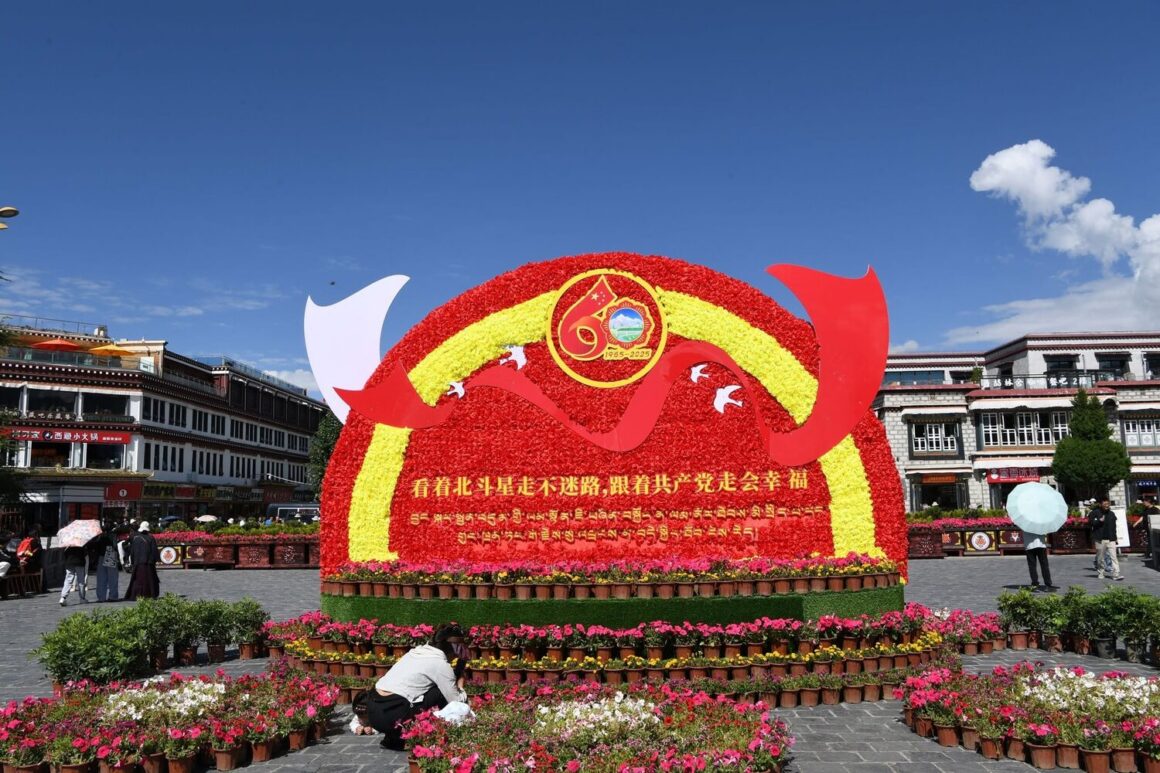
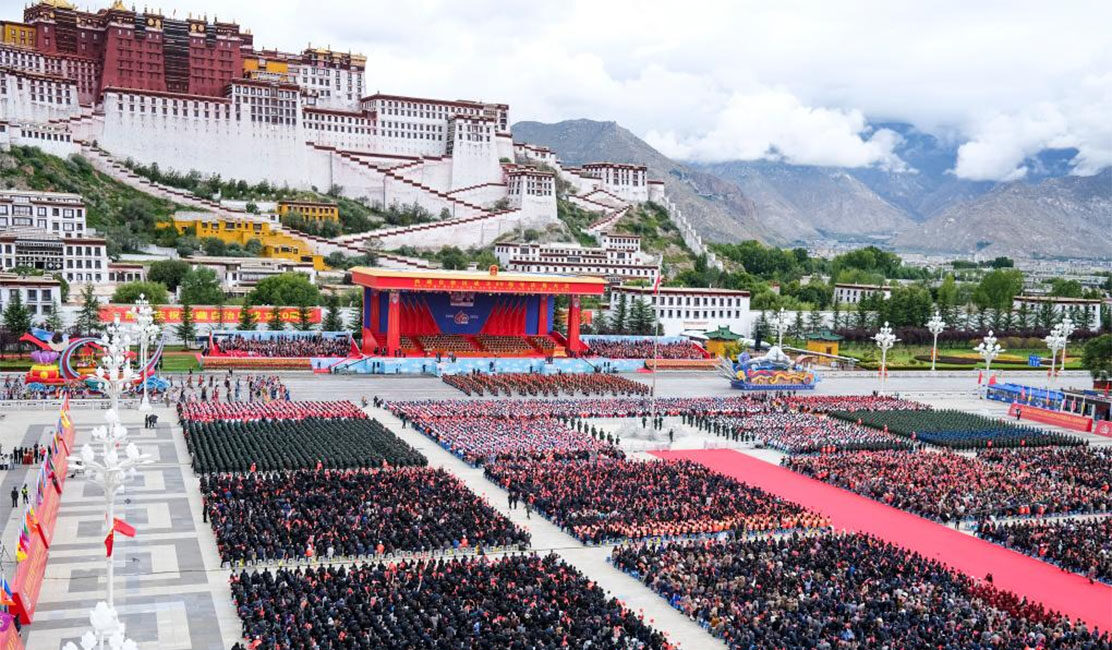
Tibet and China are two civilisations that have shared a complicated relationship, with some even viewing it as symbiotic. The current phase sees China led by the Communist Party of China (CPC) governing Tibet after its People’s Liberation Army (PLA) annexed it seven decades ago with the Dalai Lama and the Tibetan Government in Exile (officially known at the Central Tibetan Administration – CTA) based in Dharamshala, India. China has since established the Tibet Autonomous Region (TAR) in 1965— it celebrated its 60th anniversary last year in Lhasa with President Xi Jinping attending it along with members of the Politburo Standing Committee. During the celebrations, one could notice the spotlighting of Xizang, substituting Tibet in English. Xizang refers to Tibet, particularly the TAR in Mandarin Pinyin, and is one clear example of Beijing’s politics of renaming.
The name of places known as ‘Toponyms’ involves the study of the etymology, history, meaning, and cultural significance of geographic names. They are largely categorised as endonyms and exonyms, referring to local and foreign names, respectively. The significance or relevance of toponyms is seen by their reference as the Signposts to the past.1
The politics surrounding the naming of places is called ‘Toponymic Politics’, and it was embraced by academia and became an important field of study during the late 20th century. It is intriguing that the interest in Toponymic politics piqued when the world experienced decolonisation.
The practice of renaming here, which has been practised since ancient times when nations conquered territories, is largely utilised to assert power, redefine national identity, and erase/create both colonial and ideological legacies. In India, we can clearly see renaming in major cities like Bombay to Mumbai, Madras to Chennai, among others — all seen to shed the colonial legacies associated with their former names. China likewise has a long history of using Toponyms. It can be seen through the several dynasties that came to power, during the warring kingdoms, where there was frequent change in territories and finally, since the overthrow of its last monarch. It eventually led to the CPC coming to power after being victorious against the nationalists during its long civil war in the 20th century.
With the CPC ruling China since 1949, they implemented several policies, including changes in the very foundation of Mandarin with the introduction of the Pinyin and Putonghua system. This system, which was officially adopted in 1958, is seen to position Mandarin as an imperial lingua franca that the Han imposed on their multi-ethnic frontiers.2 This systemic change saw several names being changed in Chinese and in English, for example, Peking becoming Beijing, Nanking becoming Nanjing, Canton becoming Guangzhou, etc. The United Nations, international media, and several countries officially adopted this system in 1979.
China was emboldened by all of these developments, and they were encouraged in using such changes to assert their legitimacy in Tibet, Southern Mongolia, East Turkestan, etc.
In Tibet, we see how not only the name of the once independent country has become sinicised to Xizang now, but the names of Tibetan places have likewise experienced similar treatments. Shigaste, one of the most prominent Tibetan cities and the traditional seat of the Panchen Lama at Tashi Lhunpo Monastery, has been impacted by such a change of names, with it being officially called Xizage and Rikaze in Pinyin. This impact in Tibet is not limited to the names of places, as it targets the very foundation of Tibetan language and identity here. Examples here included prominent Tibetans representing China on the international stage, such as:
- Choeyang Kyi, referred to as Qieyang Shijie,
- Sonam Dhargyal, referred to as Su Mudaerji,
- Tenzin, referred to as Ding Zhen, and
- Gyaltsen Norbu, referred to as Gyancian Norbu (Beijing-approved Panchen Lama).
What all of these do is one clear thing, and that is the gradual eradication of Tibet’s independent history, its culture, and language. What began from personal names to landmarks, names of cities, and now the entire country showcases the level of long-term vision at play by Beijing when it comes to seeking legitimacy over Tibet by force. A force that is not visible by military engagement, but one that is soft, yet procures the same intended result at the end.
Seeing its success in Tibet, Beijing has carried out this very tactic in East Turkestan, where thousands of villages3 have had their name changed from 2009 to 2023, with more than 500 such name changes reflecting the ideology of the CPC — for example, Aq Meschit village renamed to Unity Village in 2018 and Dutar village renamed to Red Flag village in 2022.
The main argument that Beijing places here in such names, including renaming Tibet to 西藏 Xizang, in English, is a western imperial/colonial term for Tibet. If this is the case, why is Beijing not renaming China to 中国 Zhongguo, considering ‘China’ is a Western term? Hence, many view this as a clear policy targeting Tibet. Besides this, the name change also has major territorial implications, as Tibet connotes to an area of 2.5 million km2—including the 3 traditional provinces of Amdo (Domey), Kham (Dotoe), and U-Tsang where Tibetans live — while Xizang is only 1.2 million km2 and equates strictly to the TAR, excluding parts of Kham and the entire Amdo region. Furthermore, on 2nd September 2024, Beijing established the བོད་ལྗོངས་རྒྱལ་སྤྱིའི་ཁྱབ་སྤེལ་ལྟེ་གནས་ཁང་ Xizang International Communication Centre4 to promote Xizang and to shift the international outlook on Tibet with a strong and reinforced narrative. This can already be seen to hold fruition from the incidents at Musee Guimet and the Nepal International Film Festival where Tibet was replaced by Himalayan world and Xizang respectively.
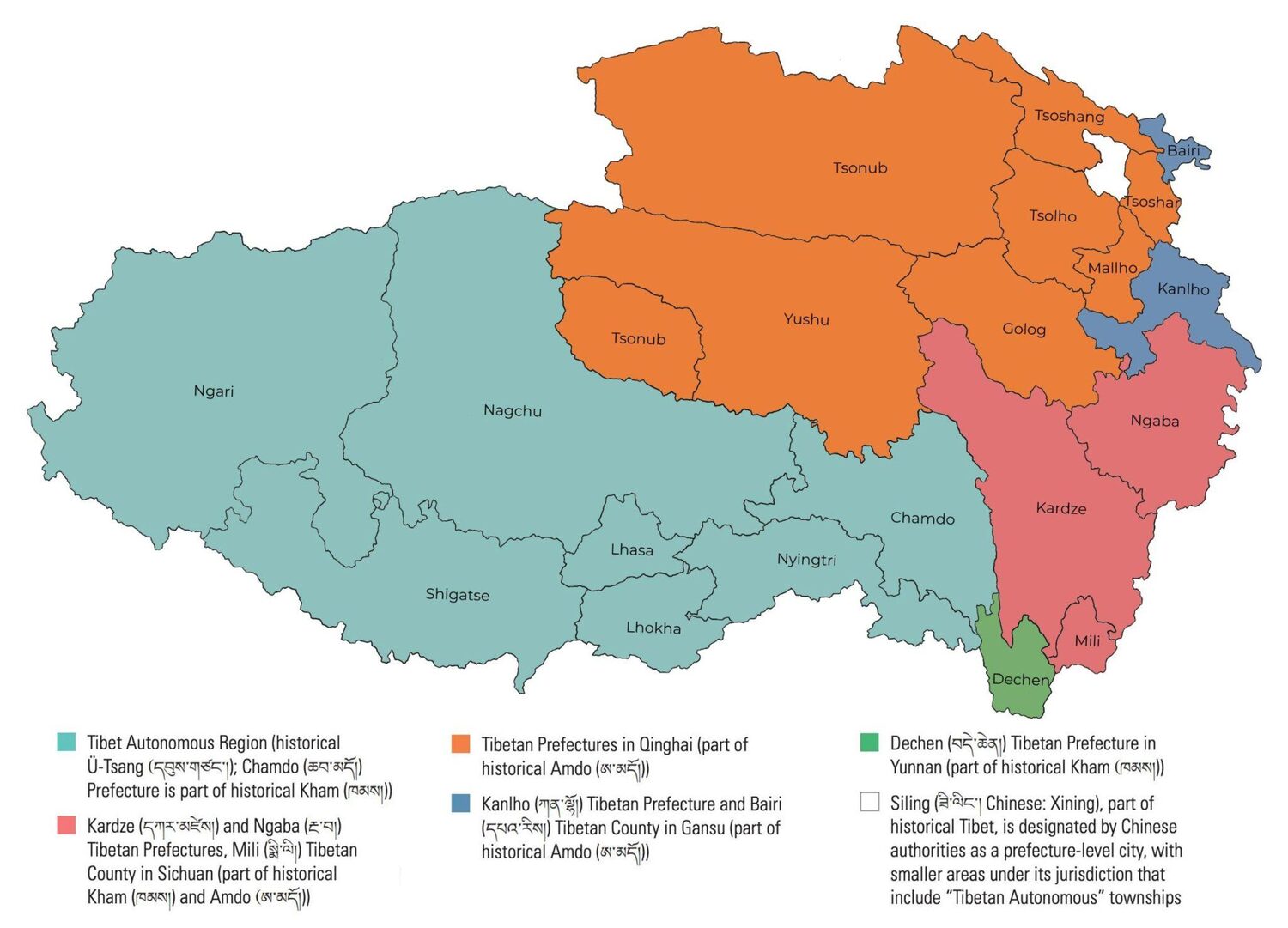
The global reaction to Beijing’s policy of replacing Tibet and Xizang — which truncates the recognised territory of Tibet — has been swift. Tibetans worldwide, from the very individuals to the Sikyong (President) of the CTA, also known as the Tibetan Government-in-Exile, are actively calling it out. India, which hosts the CTA and His Holiness the Dalai Lama, likewise has sent circulars stating that Xizang must not be used instead of Tibet, and continues to monitor this development closely. Meanwhile, the United States (U.S.) has officially recognised Tibet as a territory larger than TAR — including the Tibetan Autonomous Prefectures in the region of Amdo and Kham — across various legislative measures including the Resolve Tibet Act. The U.S. Congress recently even tabled a bipartisan legislation that would expand international recognition and support for the CTA. Conversely, many nations that can be influenced by Beijing have begun using Xizang, replacing Tibet, including Pakistan, Afghanistan, Nepal, and Bhutan, to name a few with the latter two directly sharing a border with Tibet.
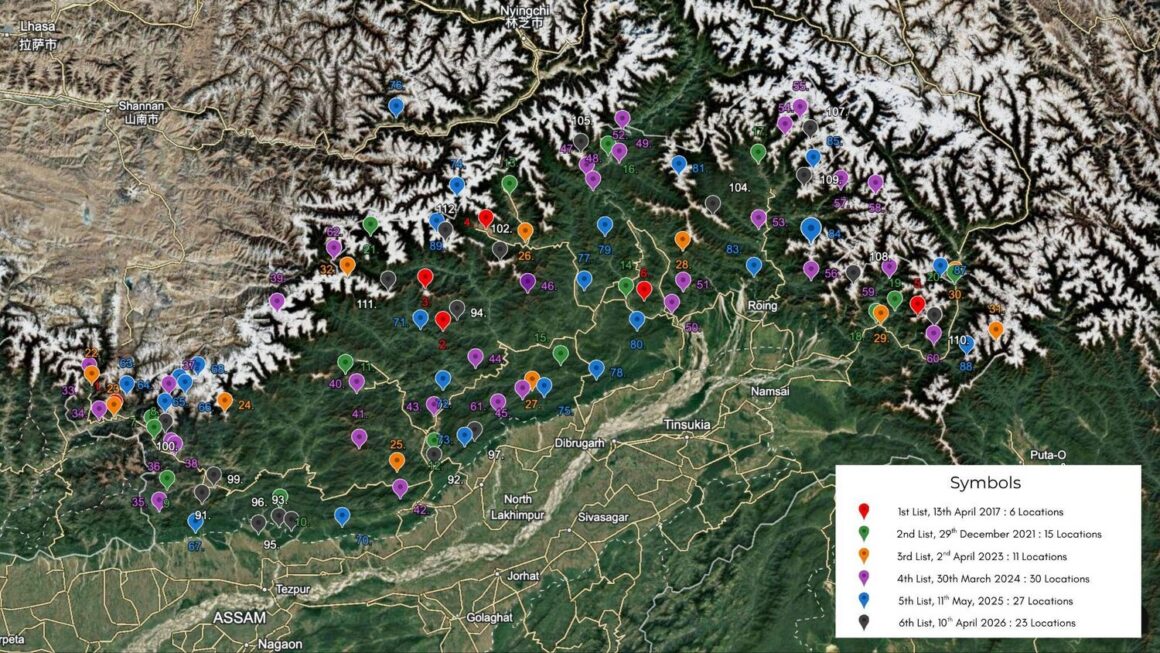
All this makes it clearly evident that Beijing is implementing this long-term policy of asserting legitimacy in territories that it has occupied and are currently under its administration. However, a major concern for India is that since 2017, Beijing has begun implementing this very modus operandi in the Indian state of Arunachal Pradesh. Beijing, under its Ministry of Civil Affairs,5 has since released a total of six batches of lists totalling 112 locations on 13th April 2017, 29th December 2021, 2nd April 2023, 30th March 2024, 11th May 2025, and 10th April 2026, respectively.
After each release of these names, which not only remain locations in the Indian state of Arunachal Pradesh but are claimed as territories of South Tibet (藏南 Zangnan), there are exchanges between the Ministry spokespersons of both India and China. Though each of them stand their ground firmly, China continues to carry this exercise even when India raises an issue against it. Among the plethora of trends available, what is concerning is that China is now claiming and renaming territories in the Indian state of Assam as well. A total of 2 locations have been identified in Assam based on the coordinates available in the 6th Batch of the list released on 10th April 2026.
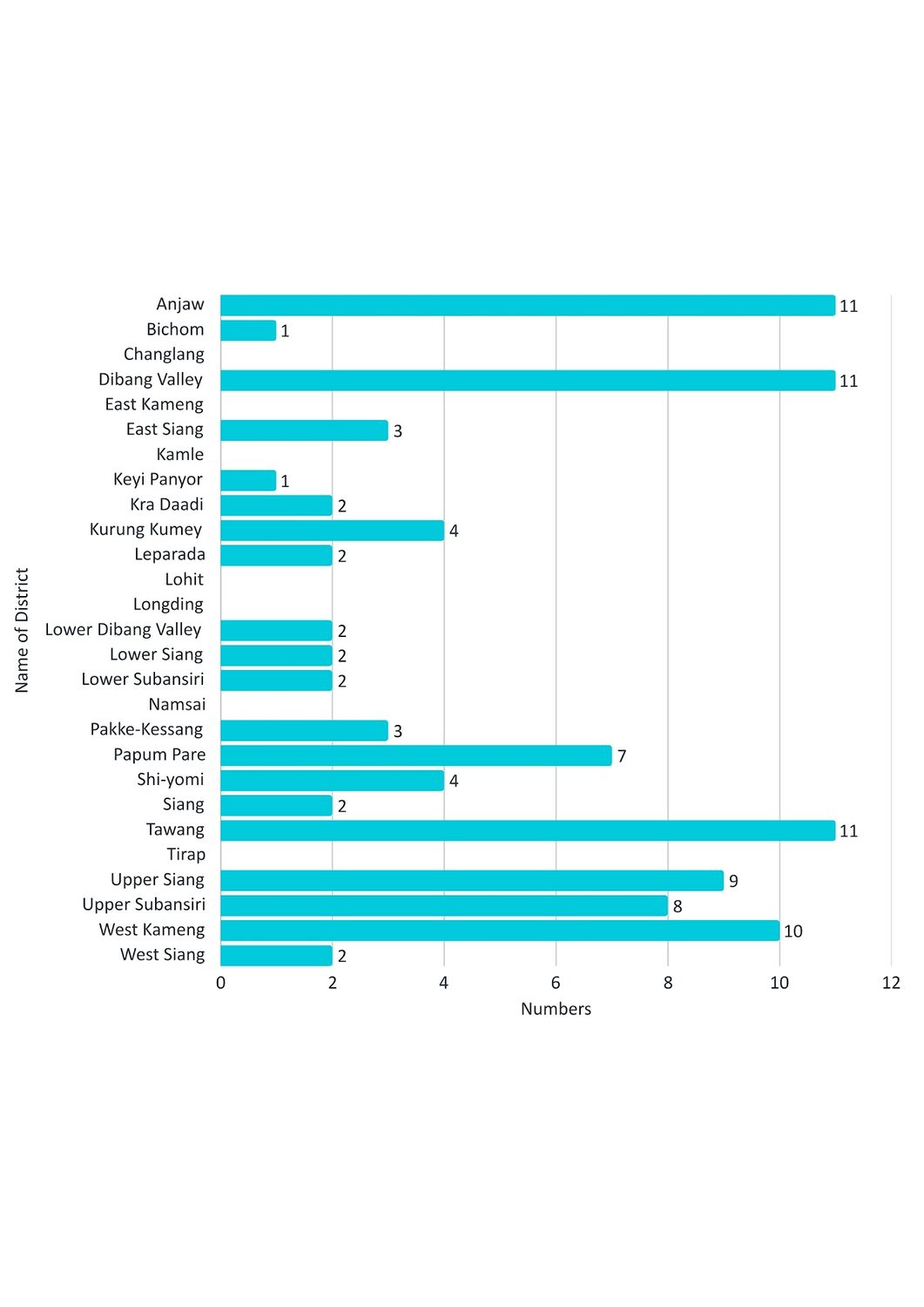
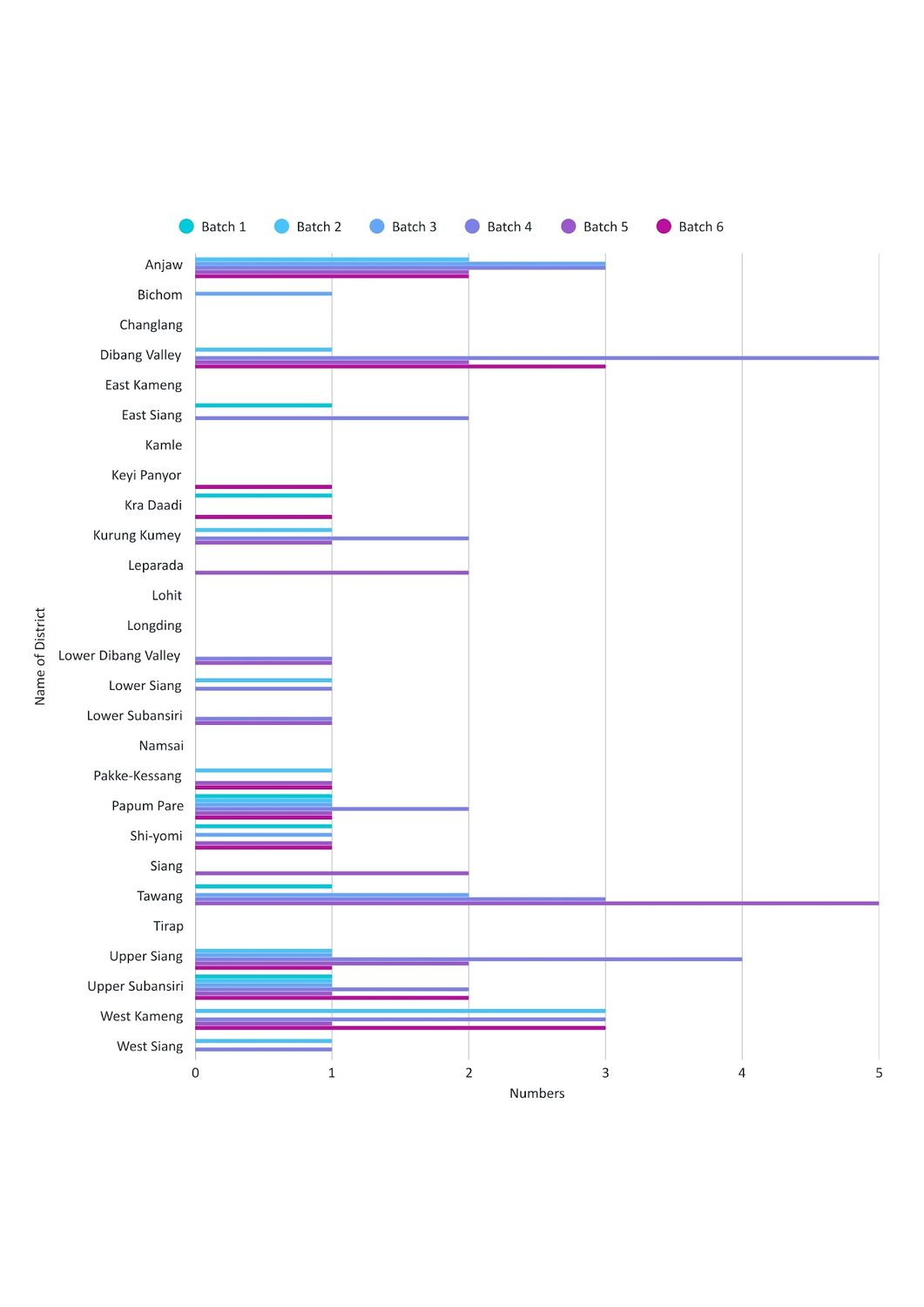
Graph 1 and Graph 2 indicate the scale of locations renamed and claimed in the Indian state of Arunachal Pradesh, showing how certain districts are seen as more significant than others. Notably, the districts of Tawang, Dibang Valley, and Anjaw all border China presently and are renamed with the highest frequency.
With Beijing’s continued push into sovereign Indian territory after its success in Tibet and East Turkestan (known as 新疆 Xinjiang), a clear pattern of rise in cartographic aggression is on display, and there is a high likelihood that territories in Assam, Aksai Chin, and beyond might be targeted. The 6th batch of names and creation of new administrative units — Cenling in March6 and Hean and Hekang in the Xinjiang Autonomous Region (XUAR) — illustrate this. One must clearly follow these developments because the arrow certainly seems to point towards a grander strategy in one-upping India by controlling the narrative to its domestic audience, sphere of influence, and larger global community.
Following the annexation of Tibet by China, India and China became neighbours for the first time in history, sharing one of the longest borders between two nations at more than 3,000 km, and with this began the contestations. Although India desired to secure cordial relations, the recent renaming and claiming of Arunachal Pradesh since the 1st batch of the list was released in 2017 is one of many avenues through which such contests take place. What India should do here is:
- Continue to develop the necessary infrastructure to understand China, which has come a long way since the 1950s and needs to continue improving, especially with China’s continued growth.
- Understand the Chinese policies in Tibet, as India shares a border with Tibet, and the policies carried out in Tibet, including its annexation, have a direct impact on India geo-strategically.
- Continue to develop the frontier regions sustainably, aligning with the aspirations of the locals.
- Bring more awareness of these developments to the public, particularly those impacted, as it is evident that one of the goals of China through toponymical politics is to ensure national cohesion domestically to such claims.
- Develop key allies and ensure they do not make mistakes or are informed of China’s claim through these exercises.
- Carry out exercises like the one taken on 7th August where the Government of India in consultation with Government of Arunachal Pradesh identified 27 places/features located in Arunachal Pradesh by standard place and feature names on the official maps of Survey of India. And likewise add the coordinates (latitude and longitude) for best accuracy/clarity moving forward.
References
- Gelling, Margaret. (1978). Signposts to the Past: Place-Names and the History of England. Book Club Associates BCA. ↩
- Kuzuoglu, Ulug. (2022). "The Chinese Latin Alphabet: A Revolutionary Script in the Global Information Age', Journal of Asian Studies 81(1): 23–41. ↩
- "Hundreds of Uyghur Village Names Change: Part of Broader Government Effort to Erase Uyghur Culture in Xinjiang", Human Rights Watch, https://www.hrw.org/news/2024/06/18/china-hundreds-uyghur-village-names-change ↩
- Official Website of iXizang, https://english.xzxw.com ↩
- Official Website of the Ministry of Civil Affairs of China, https://www.mca.gov.cn/mzsj/xzqh/2022/202204tjsj.htm ↩
- China has mapped out a third new county in Xinjiang, why? https://www.scmp.com/news/china/diplomacy/article/3349558/china-has-mapped-out-third-new-county-xinjiang-why?module=perpetual_scroll_0&pgtype=article ↩