India after the 14th Dalai Lama: A Strategic Appraisal
The passing of the 14th Dalai Lama Tenzin Gyatso will not merely end an era in Tibetan Buddhism, but will also begin the process of a complex geopolitical transition.
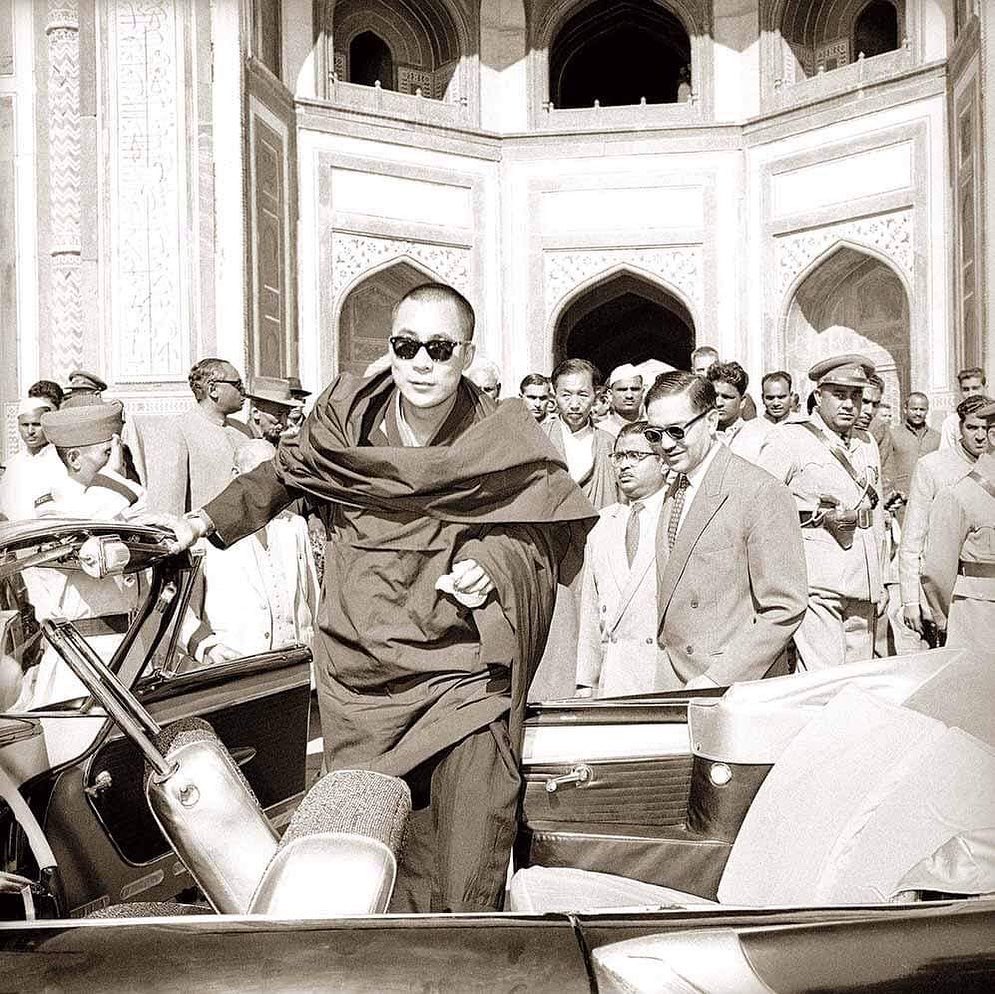
The passing of the 14th Dalai Lama Tenzin Gyatso will not merely end an era in Tibetan Buddhism, but will also begin the process of a complex geopolitical transition. Few spiritual successions in the modern world carry such layered implications—religious, political, strategic, and symbolic. The 14th Dalai Lama had escaped from Tibet to India on 31 March, 1959, following a failed Lhasa uprising against Chinese military occupation. For India, which has hosted the Dalai Lama since 1959 and remains home to the Tibetan exile community, the moment will demand a calibrated response that balances civilisational empathy with geopolitical sagacity. The whole issue of the 14th Dalai Lama’s succession will likely not be a simple event, but we will see the unfolding of a process lasting many years and stretching across numerous parts of the world, throwing up multiple narratives and even claimants and actors.
India’s task of preparation for the event is cut out. India need not be declaratory and prescriptive, but the institutions required must be in readiness. There are numerous scenarios and possibilities, including a reincarnation identified within India, one identified outside Chinese control, or the bursting into scene of rival claimants backed by competing states and authorities—foremost amongst them a successor chosen by China. Given the circumstances, India and China have tacitly recognised the presence of only one Dalai Lama. This understanding may come under threat after the 14th Dalai Lama passes.
The Indian state does not, and cannot, intervene in religious processes. Yet, it hosts the institutional infrastructure of Tibetan Buddhism in exile, including the Gaden Phodrang Trust, which the Dalai Lama has indicated will play a decisive role in identifying his successor. Tibetan Buddhists believe that high Lamas, including the Dalai Lama, are reborn in a new body. After his death, senior monks and historically, a regent chosen by the previous Dalai Lama would look for final instructions he may have left about his rebirth, seek visions through meditation at sacred sites, and send search parties to locate the child identified as the next Dalai Lama.
India must prepare to uphold a principle that the selection of the Dalai Lama is a matter of religious freedom, not political sovereignty. This principle, articulated with restraint and composure, should form the bedrock of India’s response. Simultaneously, India must enhance its internal coordination between the Ministry of External Affairs, security agencies, and the Tibetan administration in exile to manage contingencies ranging from mass gatherings to potential diplomatic pressure. The management of Dharamshala, both as a spiritual centre and a geopolitical flashpoint, will acquire heightened importance.
When the Dalai Lama passes away, India’s immediate response will likely avoid pronouncements that could precipitate confrontation with Beijing. India is likely to support the right of the Buddhists in Tibet to choose their own spiritual leader and maintain ‘structured ambiguity’ by avoiding backing any specific claimant. Simultaneously, India is likely to quietly facilitate the process of transition which will guarantee security, enabling communication among Tibetan religious authorities, and providing a stable environment for deliberation. India will likely root for a successor who commands legitimacy among Tibetan Buddhists globally, rather than one imposed through state authority.
India is wary of Chinese machinations and would prefer a process with credibility, consensus, and insulated from political manoeuvring and pressure. The Dalai Lama himself has speculated about the possibility that his successor may be identified outside the People’s Republic of China (PRC). It is perhaps likely that this event could be within India. A successor located in India could become a pressure point for Sino-Indian tensions, and transform a spiritual institution into a geopolitical contradictory dialectic.
China’s approach to the succession question is premeditated. It rests on three pillars: assertion of Chinese legal position, institutional control, and narrative management. China has always projected that it possesses the authority to approve the reincarnation of ‘Living Buddhas’ (Reincarnated Lamas), drawing upon historical precedents such as the 1793 imperial ordinance as part of China’s broader project of ‘Sinicization’ of religion. In practical terms, China is likely to prepare for the identification of a state-sanctioned Dalai Lama within its territory, possibly through the Golden Urn mechanism or other controlled processes. The precedent of the Panchen Lama—where Beijing appointed its own candidate while disregarding the Dalai Lama’s choice—offers a clear indication of its approach. The result, could also be the emergence of ‘dual Dalai Lamas’, one recognised by the Tibetan diaspora and international supporters, and another endorsed by the Chinese state. China has already cautioned India against statements that could be construed as interference in its internal affairs. This suggests that China views the succession not merely as a religious issue, but as a test of sovereignty and international influence.
The role of the United States (US) and other interested actors will be shaped by their broader commitment to religious freedom and their strategic positioning vis-à-vis China at that point of time. The US has, in recent years, articulated a clear stance that the selection of Tibetan religious leaders should be free from state interference. Legislative instruments such as the Tibet Policy and Support Act of 2020 and the Resolve Tibet Act of 2024 reflect this position, signalling potential diplomatic and economic consequences for attempts to manipulate the succession. These laws state that religious matters fall in the domain of the Tibetan Buddhist community alone, and funds have been set aside to counter Chinese disinformation and support for the Chinese exiled government. The US has expressed support for the Dalai Lama’s 2025 announcement which granted the Gaden Phodrang Trust the sole authority over the identification of the 15th Dalai Lama, which rejects Beijing’s role.
European countries and institutions, too, have begun to voice support for Tibetan religious autonomy, as evidenced by parliamentary resolutions affirming the exclusive right of Tibetan Buddhists to choose their spiritual leader. For India, the involvement of external actors presents both an opportunity and a complication. While international support could lend weight to the principle of religious freedom, overt alignment with external powers could provoke Chinese sensitivities and constrain India’s strategic autonomy.
India’s approach, therefore, may lean towards quiet convergence rather than explicit coordination and it would tend to align with shared principles without entering into coalitions or camps. The succession of the Dalai Lama must ultimately intersect with India-China relations, the future of Tibet, and the evolving discourse on sovereignty and identity in Asia. For India, the challenge is not to just ‘manage’ the succession, but to navigate its consequences. This requires a combination of restraint in avoiding premature positions, and resolve in upholding foundational principles.
India’s response to the passing away of the 14th Dalai Lama will test its ability for quiet statecraft, require the ability to support the exiled Tibetan community without appearing to intervene, and to uphold principles without precipitating confrontation. India must allow the spiritual to unfold without undue politicisation, even as it prepares for the geopolitical aftershocks. Such a measured approach would not only honour the legacy of the Dalai Lama but also reaffirm India’s own identity as a country where faith, freedom, and diplomacy coexist in a delicate equilibrium.