Why Tibet Matters
Variously described as the land of mythological Srinmo earth goddess, the last bastion of Buddhism, the 'land of snow dragon', 'roof of the world', 'water tower of Asia', 'Third Pole' and others, Tibet had attracted global attention from time immemorial.

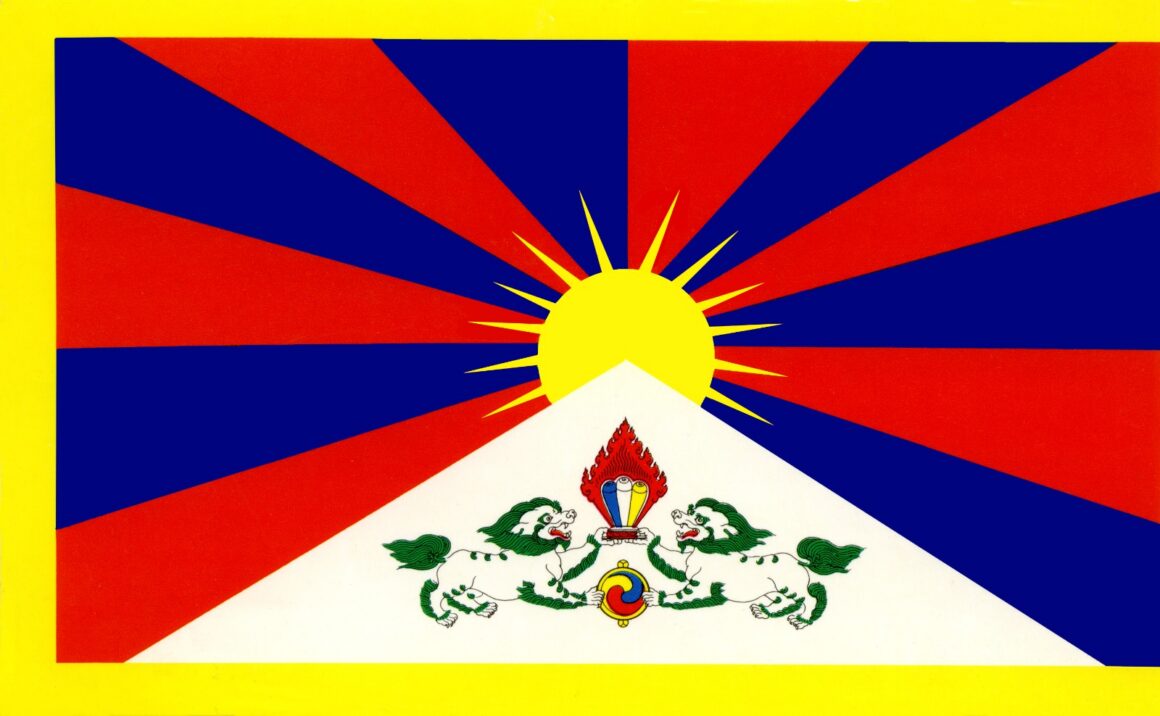
Variously described as the land of mythological Srinmo earth goddess, the last bastion of Buddhism, the ‘land of snow dragon’, ‘roof of the world’, ‘water tower of Asia’, ‘Third Pole’ and others, Tibet had attracted global attention from time immemorial. Legend also suggests a Tibetan ancestry for Raja Rupati of Kauravas of Mahabharat times. The region also boasts to Mount Kailash and Lake Manasarovar, considered to be sacred to hundreds of millions of Hindus, Buddhists, Jains, and Bön religious believers. Tibet exhibited rich history, exemplified in arts, culture, religion, philosophy, institutions, and talent. While Tibet had gone through several vicissitudes in its history, the current round of changes is structural and of long-term in nature. Six issues are raised in this article briefly on how structural changes brought by Beijing is influencing Tibetan dynamics today.
Geography
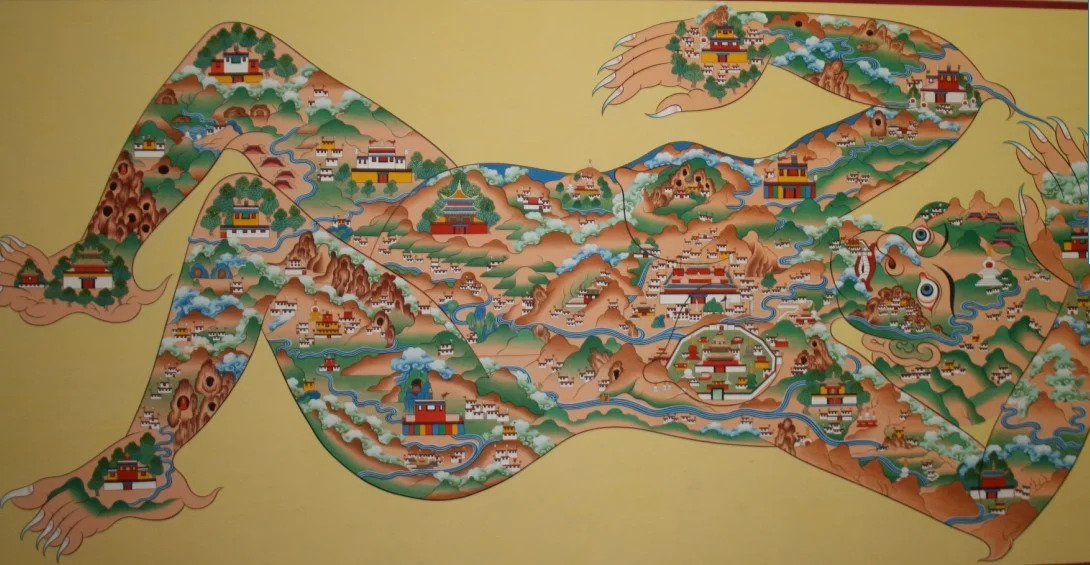
Ethnic minorities occupy nearly two-thirds of current geography of China’s south and northwest, while Han Chinese who used to be in one-third of the territory, in the south, southeast and north, are now expanding. Stretching into more than 2.5 million km2 and divided between U-tsang, Amdo and Kham, Tibet is on an average elevation of over 4,300 metres above sea level and thereby provides the region with its unique characteristics and resilience.1 For instance, given several millennia residency in the high altitude areas, Tibetan genes could adjust to low oxygen and high altitude areas of the Tibetan Plateau, unlike Han or other nationals.2 Geography acts as a barrier for outsiders’ influx, even though China is developing infrastructure and taking scientific aid like oxygen kiosks to overcome such difficulties in Han migration to Tibet.
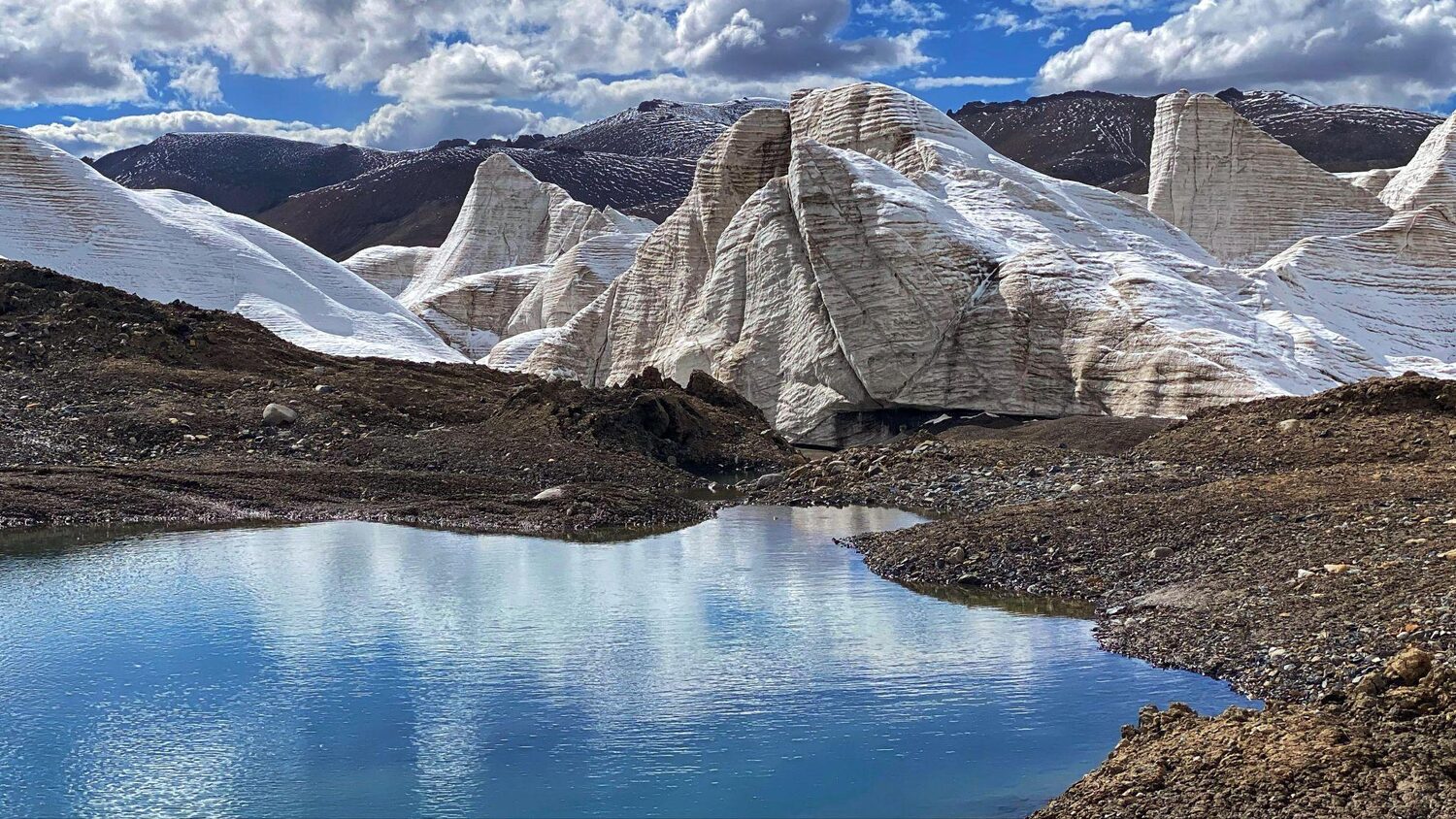
High altitude and permafrost conditions of Tibet are also conducive to glacier formations. Glaciers in Tibet account for 84 percent and 81 percent, respectively, of the total area and volume of glaciers in China.3 This is significant as the glaciers on the plateau holds over 8 trillion cubic metres of water that flow downstream.4 Major glaciers in Tibet include Purog Kangri (covering 380 km2), Laigu group, Rongbuk (at Mount Everest), Kangshung, Karola, Midui and others that sustain fresh water resources in Asia. However, due to construction work and mining, several glaciers are melting and pose environmental challenges to the region. The structural change in geography is integrating far flung Tibet into the rest of China like never before.
Population
One of the most versatile features of Tibet is its talented population. Undivided Tibet has an estimated population of above 7 million. After the 1965 reorganisation, today an estimated 3 million Tibetans live in U-tsang, compared to the rest in Amdo and Kham that were integrated into Qinghai and Sichuan and Yunnan provinces. A huge diaspora exists as refugees abroad escaping political hardships in Tibet, even though their numbers are dwindling due to restrictions in emigration policies. For instance, over a decade ago about 5,000 refugees escaped Tibet through Kodari road to land in Kathmandu. This figure has plummeted to a couple of hundreds recently due to intensive surveillance, capture, and torture of those escaping from Tibet.5 Tibetans complain of the concerted demographic changes in Tibet with the influx of Han nationals for jobs, construction work, or as permanent settlers. According to Chinese official figures, 12 percent of Tibetan population is Han Chinese,6 while other estimates suggest to more than double this figure. Hannisation has become a major issue in Tibet-China relations, with the émigré population accusing China of promoting massive influx of Han Chinese from other provinces. This has resulted in demographic changes in Tibet with most public positions in the region occupied by the migrant Han Chinese. Infrastructure projects have further facilitated and intensified these demographic changes. Tibetans tend to still occupy lower positions while Han Chinese have been at the helm of affairs. For instance, more than 80 percent of the employed population of Tibetans are engaged in agriculture, forestry, animal husbandry and fishery, and less than 4 percent of the employed population are engaged in the secondary industry.7 Official estimates suggest 70 million tourists visited Tibet in 2025, increasing from 12 million in 2013, with 95 percent of them from China.8 Demographic changes are structural in nature and Tibet saw reduction of Tibetans in their own land but also the influx of Han Chinese laying claim to the resources of the region.
Ethnic Relations
The above-stated demographic changes in Tibet are connected to China’s ethnic policies which has undergone major changes in the last seven decades. The Communist Party adopted two main policies given the postures of different factions within the party. These are, firstly, national integration policies in the 1950s and the reform period that emphasised co-optation and notional equality; and secondly, assimilationist policies during the Cultural Revolution that tried to abolish/restrict religious belief systems, marriage patterns and other aspects of ethnic minorities, including Tibetans.
After the People’s Republic of China (PRC) was established in 1949, a ‘united front’ policy was adopted in the 1950s by giving equal rights to the minorities. Article 6 of the Common Program of September 1949 and Article 3 of China’s first Constitution (1954) mention the equality of all nationalities and uphold regional autonomy in minority areas. However, Article 4 of the 1975 Constitution mentioned that China is a ‘unitary multi-national state’. During Cultural Revolution of the 1960s, regional autonomy was jettisoned, and extreme assimilation policies led to the demolition of mosques—over a million Tibetans were killed in these pogroms. Subsequently, the 1978 and 1982 Constitutions restored ‘equality’ and regional autonomy for the ethnic minorities, and the amended version of the 1982 constitution mentions the ‘unitary multi-ethnic State’. Meanwhile, China sent troops to ‘liberate’ Tibet in October 1950. A 17-point agreement was signed in May 1951, establishing China’s sovereignty over Tibet,9 regional autonomy, and not to alter the political system under the Dalai Lama’s government and others.10 However, as China began violating these provisions, Tibetan revolt took place in 1959, leading to the flight of the Dalai Lama to India. These indicate to the very abrupt and contentious policies on ethnic minorities in China.
Since the August 2020 7th Tibet Forum meeting, China is actively pushing ‘Sinicisation of Tibetan Buddhism’ by promoting ‘colonial’ boarding schools to children, forcible inter-ethnic marriages, surveillance of religious institutions and others. Here the role of Communist Party Secretary Chen Quangguo for Tibet (2011-2016) and later in Xinjiang (2016-2021) are significant in terms of instituting extensive surveillance systems in the region. Earlier, there was a window of talks between the United Front Work Department of the Chinese government and the Central Tibetan Administration on resolving China-Tibet relations in 2002 and 2010 when nine rounds of talks with the Dalai Lama’s representatives (the ninth in January 2010).11 However, these fizzled out. China has hardened its position on the Tibet issue, as with other ethnic minorities in its Sinicisation drive.
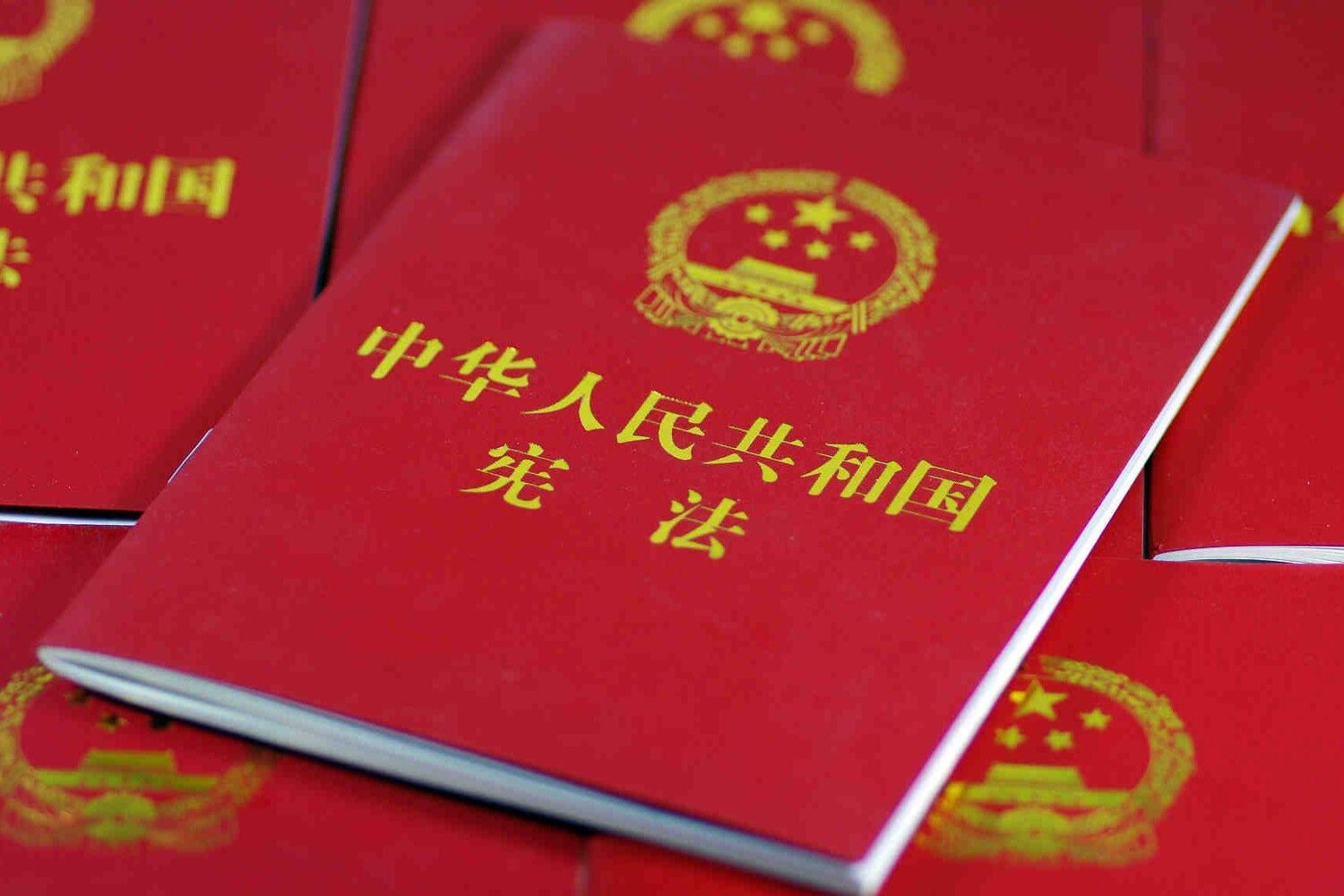
Today, following the implementation of assimilation policies, inter-ethnic relations in China are configured as a pomegranate with all seeds (56 nationalities) bound together in a tight embrace, leaving no scope for ‘autonomy’. In March 2026, China’s parliament passed a Law on Promoting Ethnic Unity and Progress and began implementing it in July.12 Divided into 7 chapters and 65 articles, the new law intends to build a ‘community of the Chinese people’ as a part the CCP’s ethnic work. It wants to build a shared destiny among the ethnic groups “sharing in joy and sorrow, honor and disgrace, and life and death.” The law imposes on all citizens an “obligation to preserve national unity and the unity of the nation’s ethnicities, and shall preserve the nation’s sovereignty, security, and developmental interests.” It categorically opposes interference of “foreign forces”. Further, it states that “All acts using excuses such as ethnicity, religion, or human rights to insult and disparage, contain and suppress, or infiltrate and undermine the PRC are to be resolutely opposed.” In order to establish a “correct perspective”, the state will “guide each ethnic group in promoting identification with Chinese culture.” Thus, China’s tighter ethnic policy postures today have become a major structural factor in the increasing division and differences between Beijing and ethnic minorities.
Economy
China today is a $20 trillion economy, the second largest in the world. However, Tibet remains the poorest with an estimated $42 billion in gross domestic product (GDP). While Beijing had subsidised Tibetan economic development, it had outpoured more resources from the region, specifically, water, minerals (such as copper, chromium, iron, lithium and others), and hydro-electricity. For instance, between 1951 and 2015, China spent $100 billion in projects in Tibet. Another estimate suggested that after China launched Western Development strategy, in 2001 and 2009 alone, China spent $45.4 billion in Tibetan economy, including the $3.6 billion Tibet railway from Gormud to Lhasa by 2006.13 Cumulatively by 2021, according to State Council’s Information Office, China spent over $253 billion in Tibet, with one-third spent on infrastructure projects.14 For 2025-26, China is estimated to spend over $27 billion in subsidies and projects in Tibet.15
China has built extensive dual-use infrastructure facilities such as highways, railways, airfields, fibre-optics, energy pipelines, telecommunications and others to ensure security and stability of Tibet and other regions as well as for pumping out strategic resources into rest of China. While China argues that these infrastructure facilities are meant for connectivity, poverty alleviation, and economic development, Tibet on the other hand remains the poorest region of the country.16 The transportation networks trigger tourism, migration and other sectors from other parts of China.17
One of the most consequential changes in Tibet is the pumping out of its minerals by China’s agencies and the abovementioned infrastructure projects contribute to their swift transfers. Tibet is estimated to possess over 100 minerals that are considered to be ‘strategic resources.’18 Tibet ranks among the top five in China in terms of production and reserves of over 10 mineral resources, including 80 million tonnes of copper, 20 million tonnes of gold, and 30 million tonnes of lead and zinc.19 This resource potential is valued at over 650 billion yuan, making it a key strategic resource reserve base for China. China’s dependence on copper imports exceeds 70 percent and dependence on lead and zinc imports is approximately 30 percent. China’s state-owned enterprises or Han Chinese mainly own these companies with Tibetans hardly figuring out in the management of these projects.
Environment
China’s militarisation, large-scale construction of dual-use infrastructure projects, and mineral exploitation has created environmental challenges in Tibet. River diversion, mineral exploitation, infrastructure projects have wrecked the environment of Tibet. For instance, mining caused contamination of water and soil with toxic substances such as arsenic, destruction of habitats, and undermined the ecological balance. Intensive mining, especially riverbed mining, has led to deforestation and salination due to high contents of heavy metals entering into the rivers and the ecosystem of Tibet. Most of the victims of these projects are Tibetans.
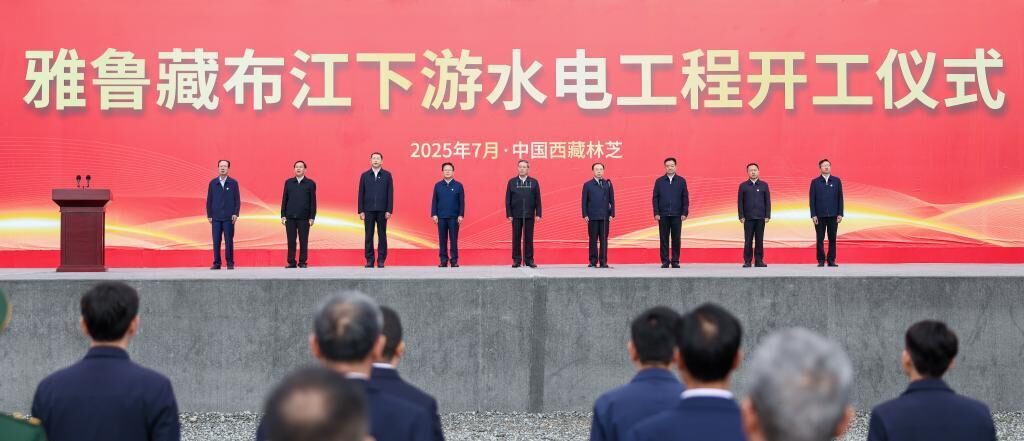
One of the main environmental challenges in Tibet is the control of river waters and their exploitation. Tibet is the source for 10 major rivers that flow into China, South and Southeast Asia, providing water resources for hundreds of millions of people. China has constructed the Zangmu dam on Yarlung Zangpo that generates over 510 MW of electricity,20 Pengduo dam on Lhasa River which generates 160 MW of electricity, Zhikong dam with 100 MW capacity, Suwalong on Jinsha River that generates 1200 MW of electricity, and has plans for dams at Dagu (640 MW), Jiacha (320MW), and Jixu (560MW). Premier Li Qiang’s inauguration in July 2025 of dam process near Medog costing about $167 billion, is to generate an estimated 60 GW of electricity.21 Most of the beneficiaries of these hydro-electricity projects are Han Chinese.
Geopolitics
Although Tibet borders many countries and its diaspora had fanned out to several countries in the world—mainly to Nepal, Bhutan, and India—China has curtailed their influence. China achieved this by either working within the multilateral institutions, such as the League of Nations and its successor United Nations (UN), or through bilateral, non-reciprocal, and binding “one China” arrangements with a number of countries, thereby geopolitically isolating the Tibetans. When the Kuomintang was in power in the Republic of China, it bound the successive United States administrations to consider Tibet as a part of China and lobbied against including Tibet in the League of Nations/UN debates. After the PRC was formed in 1949, despite animosity between China and the US till 1971, Tibet hardly figured in the UN debates. Instead of debates on self-determination, the US and European Union (EU) mainly focused on human rights and religious freedom issues in Tibet.
Similarly, Nepal and India, which declared Tibet as a part of China in the 1950s, were bound by several Chinese political conditionalities. For instance, Nepal had declared Tibet as an “inalienable” portion of China and subsequently allowed the Chinese police or paramilitary forces into Nepal to chase away escaping Tibetan refugees. Nepal’s dependence on China’s aid has created constraints on Kathmandu. Likewise, while India did not declare Tibet as an “inalienable” portion or “historical” part of China, Beijing’s pressure on New Delhi is extensive.
Further, at the multilateral level, Beijing began conducting China Xizang Trans-Himalaya Forum meetings at Nyingchi in Tibet and opposite to Arunachal Pradesh with the participation of officials from Pakistan, Nepal, Sri Lanka, and Bangladesh. Five meetings have been held so far with the first and second in 2018 and 2019, the third from October 4–5, 2023; fourth from July 3–5, 2024; and fifth from July 16 to 18, 2026.22 Earlier, on 06 January, 2021 China, Nepal, Pakistan, Afghanistan, Sri Lanka, and Bangladesh held the first meeting of director-general level working groups on COVID-19 and poverty alleviation cooperation. China packages these for cooperation between these countries in infrastructure development, health cooperation, green development, among others. However, according to Lan Jianxue of China Institute of International Studies, “if China and these countries face threats in areas other than non-traditional security in the future, the four countries may further widen the scope of cooperation between them.”23
Conclusion
It is argued here that Tibet is undergoing major changes in geographical, demographic, economic, ethnic, environmental, geopolitical, and other spheres. These are structural in nature and not cyclical suggesting that China’s policies are going to be concerted, long-lasting, and comprehensive in nature. China promised autonomy to the ethnic minorities in its Common Program and the Constitutions, including in its 17-point agreement in Tibet. However, it had introduced assimilation policies, jettisoning co-optation and integration policies. Sinicisation policies are being introduced extensively that affect everyday life in minority region, including Tibet. This process has brought in a new element in Han-ethnic minorities relations, also strengthened by Han nationalism and migration patterns. Traditional Tibet was divided in 1965, and its population was dispersed in U-tsang (Tibet), Qinghai (Amdo), and parts of Yunnan and Sichuan provinces (Kham), thus weakening their bargaining capacity. While protest movements have increased in intensity—such as those in 1959, 1987, 2008, alongside self-immolations and others acts—China’s grip on the region has not decreased due to the physical integration of the region as well as other factors. This makes a strong case to rethink of policies, as Tibet’s message resonates across the world.
References
- Kuzmin, Sergius L. (2011). Hidden Tibet: History of Independence and Occupation. Edited by Andrey Terentyev (Translated from Russian by Dmitry Bennett). Chapter 1. Dharamsala, H.P.: Library of Tibetan Works and Archives. ↩
- See Sanders, Robert (2010). "Tibetans adapted to high altitude in less than 3,000 years", UC Berkeley News. 01 July. Available at https://news.berkeley.edu/2010/07/01/tibetan_genome/ ↩
- Shiyin, Liu et al. (2014). "Glaciers in China and Their Variations", in J.S. Kargel, G.J. Leonard, M.P. Bishop, A. Kääb and B.H. Raup (eds.), Global Land Ice Measurements from Space. Springer Praxis. https://doi.org/10.1007/978-3-540-79818-7_25 ↩
- "Over half of Tibetan Plateau's glaciers may melt by 2100", Tibetan Review, 20 August 2024, https://www.tibetanreview.net/over-half-of-tibetan-plateaus-glaciers-may-melt-by-2100/#:~:text=China%20arrests%20Tibetan%20monk%2C%20another,to%20disappear%20in%20the%20future ↩
- "Tibetan refugees who survived shooting by Chinese police tell their story" Asia News, 26 October 2006. Available at https://www.asianews.it/en/east-asia/china/tibetan-refugees-who-survived-shooting-by-chinese-police-tell-their-story; Sharma, Gopal (2015). "Nepal detains Tibetan refugees in crackdown as China's influence grows", Reuters, 15 November. Available at https://www.reuters.com/article/world/nepal-detains-tibetan-refugees-in-crackdown-as-chinas-influence-grows-idUSKBN13A2BP/; and Dhakal, Binod (2026). "Refugees in Nepal: Between humanitarianism and geopolitics", Nepal News, 30 May. Available at https://english.nepalnews.com/s/explainers/refugees-in-nepal-between-humanitarianism-and-geopolitics/ ↩
- Fischer, Andrew M. (2021). "Han Chinese population shares in Tibet: Early insights from the 2020 census of China", 20 September. Available at https://www.niussp.org/migration-and-foreigners/han-chinese-population-shares-in-tibet-early-insights-from-the-2020-census-of-china/ ↩
- See "第七次全国人口普查结果公布!中国人口共141178万人" [The results of the seventh national census are released! China's population is 1411.78 million. 11 May 11 2021. Available at http://www.miluo.gov.cn/28584/60906/60910/60924/content_1815734.html; Poston Jr., Dudley L. and Jing Shu (1987). "The demographic and socioeconomic composition of China's ethnic minorities", Population and Development Review 13(4): 703-22, December. ; and Rongxing, Guo (2020). China Ethnic Statistical Yearbook 2020. Palgrave Macmillan. ↩
- "China's Xizang sees steady tourism growth in 2025" Xinhua, 24 January 2026. Available at https://english.news.cn/20260124/91406e252b4e4649b41a850440f8ff90/c.html; "Tourism generates nearly 20 percent of the local GDP and sustains 11 percent of the population", Tourism in Tibet, Available at https://factsanddetails.com/china/cat6/sub37/item2846.html. However, Simon Denyer and Congcong Zhang argued that these figures are inflated. See "China's Tibet tourism statistics just don't add up", Washington Post, 06 October 2016. Available at https://www.washingtonpost.com/news/worldviews/wp/2016/10/06/tibettourism/. ↩
- China claims sovereignty over Tibet since ancient times. However, Tibetans deny this and mention 763 AD seizing of Tang dynasty capital Chang'an and installing a pro-Tibetan ruler and 821 AD pillars erected at Lhasa, Chang'an and Qingshu (Gansu) as proof of this. See Sharma, Vidur Ji Sharma (2025). "The Tibetan quest for independence: A historical overview and an exploration of the future", Occasional Paper, Observer Research Foundation. 29 August. Available at https://www.orfonline.org/research/the-tibetan-quest-for-independence-a-historical-overview-and-an-exploration-of-the-future See also Central Tibetan Administration (2018). Tibet was never a part of China. Dharamshala: Department of Information and International Relations, Central Tibetan Administration. October. Available at https://tibet.net/wp-content/uploads/2026/03/TWNPC-2026.pdf ↩
- Arya, Tsewang Gyalpo (n.d.). "The 17-point agreement: What China promised, what it really delivered and the future?", Available at https://tibet.net/the-17-point-agreement-what-china-promised-what-it-really-delivered-and-the-future-2/ ↩
- Qian, Li (2019). "China's veteran religion official continues to contribute after retiring", Global Times, 14 March. Available at https://www.globaltimes.cn/content/1142158.shtml ↩
- China Law Translate (2026). Ethnic unity and progress law, 12 March 12.Available at https://www.chinalawtranslate.com/en/ethnic-unity-and-progress-law/ ↩
- Roberts, Dexter (2015). "Tibet can't kick its subsidy habit", Bloomberg, 17 December. Reprinted at https://tibet.net/tibet-cant-kick-its-subsidy-habit/ ↩
- "Infrastructure investment greatly boosts Tibet development", 22 May 2021. Available at http://english.scio.gov.cn/m/pressroom/2021-05/22/content_77519357.htm and "China planning building spree in Tibet as India tensions rise, sources say", Reuters, 04 September 2020. Available at https://www.reuters.com/world/asia-pacific/china-planning-building-spree-tibet-india-tensions-rise-sources-say-2020-09-04/ ↩
- "China investing $27.8 billion in major construction projects on 60th 'autonomous' Tibet anniversary", Tibetan Review, 20 January 2025. Available at https://www.tibetanreview.net/china-investing-27-8-billion-in-major-construction-projects-on-60th-autonomous-tibet-anniversary/ ↩
- Qing, Li (2019). "西藏的发展阶段、主要矛盾与战略地位" [Tibet Development Stage, Main Contradictions and Strategic Status in Tibet, 财经智库 [Financial Think Tank] 4(2): 63-84, March. https://doi.org/10.20032/j.cnki.cn10-1359/f.2019.02.005 ↩
- Guixi, Zhang (2021). 川藏铁路对沿线城市就业影响研究 [Research on the Influence of Sichuan-Tibet Railway on Employment in Cities Along the Line. Beijing Jiaotung University. May; Yundan, Danzeng (2015). "西藏旅游交通的现状、问题及对策研究" [Research on the current situation, problems and countermeasures of tourism transportation in Tibet, 北方经贸 [Northern Economic and Trade] 12: 56–57. ↩
- Mindat (n.d.). "Qulong Cu-(Mo) deposit", Available at https://www.mindat.org/loc-134575.html%20and%20https:/miningdataonline.com/property/1290/Qulong-(Julong)-Mine.aspx-Mine.aspx) ↩
- Shuangjie, Wang (2021). "保障青藏高速的工程健康" [Ensuring the Engineering Health of the Qinghai-Tibet Expressway, 中国公路 [China Highway] 5, https://doi.org/10.13468/j.cnki.chw.2021.05.011; CSCEC (2021). "The world's highest highway, built with the participation of China Construction Transportation, opens to traffic", 26 August. Available at https://www.cscec.com/xwzx_new/zqydt_new/202108/3387234.html; Go To Tibet (n.d.). "Road transportation to Tibet", Available at https://www.gototibet.com/travel-guide/tibet-travel-advice/road-transportation-to-tibet.html ↩
- Ranjan, Amit (2020). "China's hydropower projects on River Brahmaputra", ISAS Briefs, NUS, 06 August. Available at https://www.isas.nus.edu.sg/papers/chinas-hydropower-projects-on-river-brahmaputra/ ↩
- Jeshong, Tsewang Dorji and Kalsang Dolma (2025). China's strategy to escalate water war over Tibet's river". Central Tibetan Administration. 04 August 4. Available at https://tibet.net/chinas-strategy-to-escalate-water-war-over-tibets-river/ ↩
- Daqiong and Guo Yanqi (2026)., "Trans-Himalaya Forum focuses on green development", China Daily, 17 July. Available at https://global.chinadaily.com.cn/a/202607/17/WS6a5a4882a310986e2b465ef9.html and "The 4th China Xizang Trans-Himalaya Forum for International Cooperation kicked off in Lulang", Tibet.cn, 05 July 2024. Available at http://eng.tibet.cn/eng/index/top/202407/t20240705_7654759.html ↩
- Jianxue, Lan (2021). "'Himalayan Quad' hype is Cold War mentality", Global Times, 20 April. Available at https://www.globaltimes.cn/page/202104/1221560.shtml ↩