Living between Giants: Bhutan’s Strategic Lessons
If one scans the global map, there is no country quite like Bhutan: a nation of around 700,000 people in the high eastern Himalayas, situated between India to the south, and China to the north.

If one scans the global map, there is no country quite like Bhutan: a nation of around 700,000 people in the high eastern Himalayas, situated between India to the south, and China to the north.
By 2050, China is poised to be the world’s largest economy, with India the second largest. Both possess nuclear weapons and massive armed forces, and have border disputes, even fighting a war in 1962, with occasional flare-ups since.
How, then, did Bhutan survive, and even thrive, in such a neighbourhood? What lessons does it offer to other small countries in an era where sovereignty is no longer guaranteed, as seen in Ukraine and other conflicts where powerful states influence instability across regions from Africa to Asia?
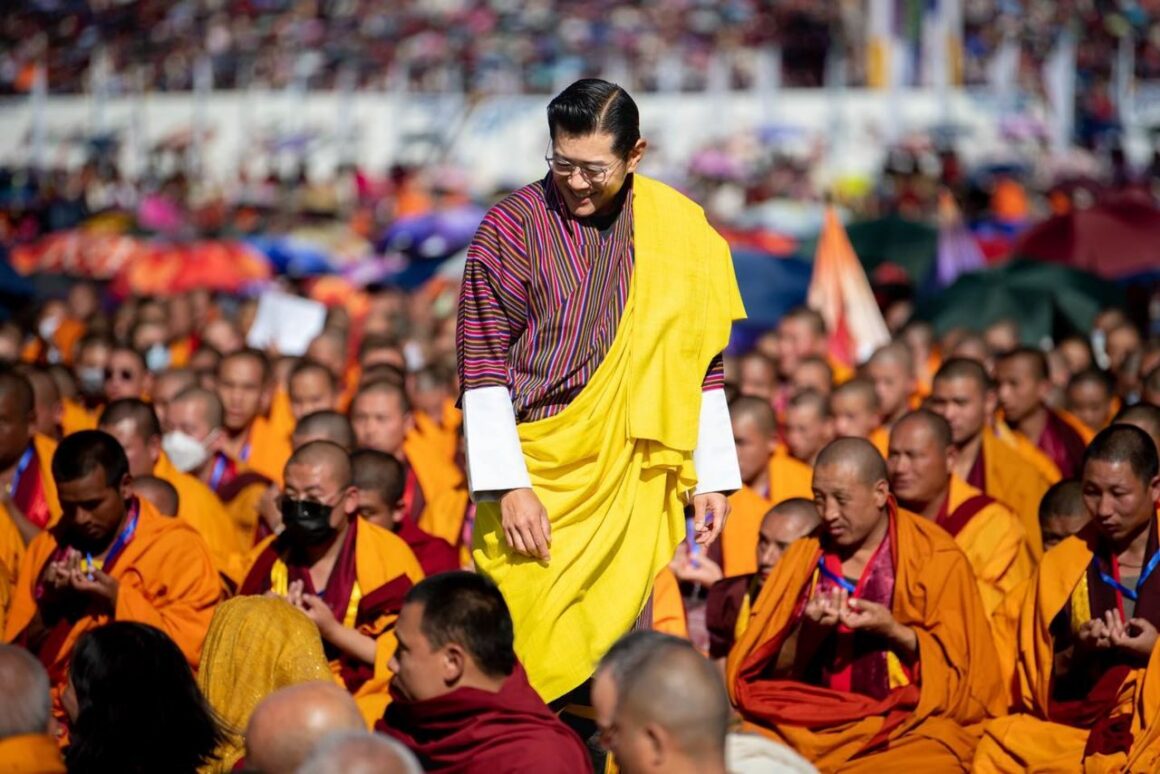
For a visitor, two features stand out in Bhutan. The first is the network of dzongs or fortresses built in strategic locations, which continue to serve administrative and religious functions. The second is the continued use of national dress, with the Gho for men and the Kira for women. Both reflect a deeper and historical reality of security and identity.
Historically, Bhutan relied on its formidable terrain and strategic fortifications to deter invasions, particularly from the north. Geography acted as a natural defence, making any military campaign costly and uncertain.
Bhutan’s encounters with the British in the 19th century reinforced this reality. Although it ceded the Assam and Bengal Duars, it retained sovereignty due to three factors: the prohibitive cost of invasion, the lack of significant economic incentives, and its eventual role as a buffer state along the Himalayas.
The mid-20th century brought three decisive changes that impacted Bhutan deeply. The first was India’s independence in 1947 which led to the India–Bhutan Friendship Treaty,1 later revised in 2007, laying the foundation for close cooperation.
The second and third changes were the absorption of Tibet and Sikkim into China and India respectively, albeit by different means, leaving Bhutan as the last surviving Vajrayana Buddhist Kingdom.
Bhutan’s response was clear which is to strengthen sovereignty while managing its external environment carefully. Its foreign policy rests on a delicate balance of being firm on independence, and yet cautious not to antagonise either neighbour. A small state surrounded by giants cannot afford to be perceived as a threat.
In its relationship with India, Bhutan has worked consistently to build trust, maintaining close coordination on issues affecting Indian security and foreign policy. This has allowed Bhutan to gradually expand its own strategic space without undermining the relationship.
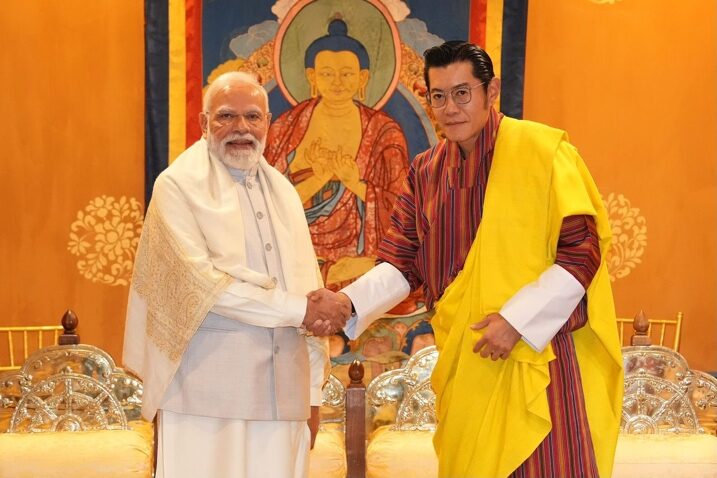
With China, Bhutan has no formal diplomatic ties but maintains friendly ties and functional engagement through peaceful border negotiations.
In this sense, Bhutan plays a stabilising role in a contested region. It serves not only as a buffer between two major powers but also as a country deeply invested in avoiding conflict between them. During the 2017 Doklam crisis, Bhutan acted with restraint, seeking to prevent escalation as Indian and Chinese forces faced off.
At the domestic level, stability is central to survival. Bhutan’s transition to democracy in 2008 was not only a political reform but also a strategic step to build long-term resilience. A system with distributed power and strong institutions is better equipped to withstand internal and external pressures.
Importantly, Bhutan’s foreign policy has remained consistent across governments, reinforcing predictability and trust externally.
Bhutan’s geostrategic location could have been either a blessing or a curse. It is to the careful and often shrewd diplomacy of its Monarchy that it has largely been a blessing.
Yet the same factors that preserved Bhutan’s independence—its rugged terrain, limited natural resources, and small homogenous population—also constrain its economic options. Unlike its neighbours, Bhutan lacks large domestic markets and industrial capacity.
While the country has made strong progress in health and education, it has struggled to generate sufficient employment for its youth. As a result, many Bhutanese are seeking opportunities abroad, particularly in Australia and the Gulf.
Recognising these challenges, Bhutan is attempting to leverage its location through initiatives such as the Gelephu Mindfulness City,2 envisioned as a gateway linking South and Southeast Asia, and attracting investment to the region.
Bhutan’s experience offers a few clear lessons for small states living alongside larger powers.
- First, never pose, or even appear to pose, a security threat to larger neighbours. Understanding their core concerns is essential.
- Second, domestic stability is inseparable from foreign policy. Internal divisions can invite external pressures, making unity and effective governance critical.
- Third, small states are not without agency. With careful leadership, they can maintain an independent voice even in an asymmetric world.
- Fourth, in the absence of hard power, soft power becomes crucial. Bhutan has leveraged its environmental leadership, carbon-neutral status, and Gross National Happiness development philosophy to build international goodwill.
- Finally, even in a difficult strategic environment, a country must not lose sight of its internal priorities. Stability, harmony, and the well-being of its people remain the ultimate foundations of national strength.
References
- https://www.mea.gov.in/Images/pdf/india-bhutan-treaty-07.pdf ↩
- https://thebhutanese.bt/his-majesty-announces-gelephu-mindfulness-city-sar-project-of-1000-sq-km/; https://thebhutanese.bt/gelephu-mindfulness-city-sar-project-to-host-companies-on-cutting-edge-of-sustainability-technology-and-finance/ ↩